Koit · The nightingale of the Emajõgi
Lydia Koidula
Born 24 December 1843 in Vändra, died 11 August 1886 in Kronstadt
· +7.9° · S · day
the sun at noon on the day she was born, computed
Sunrise at Vändra on 24 XII 1843 at 09:11, on 11 VIII 1886 at 05:30 (in today's Estonian clock time, computed)
Mu isamaa on minu arm,
kel südant annud ma,
My fatherland is my love,
to whom I have given my heart,
A parish clerk’s daughter from Vändra wrote her father’s newspaper without a byline, gave the first song festival its two Estonian songs, put the first Estonian play on a stage, and died at forty-two in a naval town on an island in the Gulf of Finland. The name she wrote under means “of the dawn”.
01BeginningsAlgus
01 · Vändra — Pärnu · 58°39′N 25°02′E
A schoolmaster’s daughter who wrote for her father’s paper.
From Vändra to the Ülejõe schoolhouse in Pärnu, from a German-language girls’ school to the desk of the Perno Postimees. Before Lydia Jannsen became Koidula, she was, at seventeen, already writing for her father’s paper.
- 1850 The family moves to Pärnu in 1850, at six 2,200 days since the last
- 1857 Perno Postimees in 1857, at thirteen 2,557 days since the last
- 1861 First piece in print in 1861, at seventeen 1,461 days since the last
- 1862 The home-teacher’s examination in 1862, at eighteen 365 days since the last
- 1863 Ojamölder ja temma minnia in November 1863, aged 19 669 days since the last
- 1863 Tartu and the Eesti Postimees in December 1863, aged 19 30 days since the last
Lydia Emilie Florentine Jannsen was born on 24 December 1843, 12 December old style, at Vändra, the first child of Johann Voldemar Jannsen and Juliana Emilie Koch. The house where she was born, a former parsonage, stands near the road from Vändra to Viljandi; since 1958 Vändra has also had a memorial stone with her portrait by Juhan Raudsepp. Her father would later edit the Perno Postimees and publish the Eesti Postimees, help found the Vanemuine Society and write the song Mu isamaa, mu õnn ja rõõm. In 1843 all of that still lay ahead. Five more children followed Lydia: a sister, Eugenie, and the brothers Julius, Leopold, Harry and Eugen.
In 1850, when Lydia was six, the family moved to Pärnu. Her father became schoolmaster at the Ülejõe schoolhouse, built that same year, and the house stayed the Jannsens’ home for thirteen years. Today the address is Johann Voldemar Jannseni Street 37, and since 1945 the building has housed the Koidula Museum. A tablet on the wall reads that J. W. Jannsen lived here from 1850 to 1863 and that his daughter Lydia grew up here. Her brother Harry, later a journalist and one of the founders of Estonian national theatre, was born in Pärnu in September 1851.
Her first lessons came from her father at home. From August 1854 to December 1861 she attended the Pärnu Higher Girls’ School. The school was German-language: German was the language of schooling and of the educated class in nineteenth-century Estonia, and it was the language she would later translate a great deal from, prose, poetry and drama. In the autumn of 1862 she passed the home-teacher’s examination at Tartu University, the highest education then available to a woman. She never took up work as a governess. Her work was waiting at home, at her father’s editorial desk.
In 1857 her father began editing the weekly Perno Postimees ehk Näddalileht, the first Estonian-language periodical. Its appearance is regarded as the beginning of the national awakening, and the paper was put together in the same Ülejõe schoolhouse where the family lived. The editor drew his daughter into translating and adapting reading matter. Lydia’s first piece to reach print was the story Kiwwi-rist in 1861; she was seventeen. She translated and adapted stories from German for the paper and worked beside her father on it, in Pärnu as later in Tartu. In practice that made her Estonia’s first woman journalist.
Her first book appeared in 1863 at her father’s initiative: the translated and adapted story Ojamölder ja temma minnia, licensed for print on the last day of November. The subtitle says who set the tale down: “A tale for the joy and instruction of the Estonian people, set down by Lydia Jannsen.” Ojamölder was later translated into Finnish and German. The later stories, Peru oma viimane Inka in 1865 and Juudit in 1870, came out under her father’s name instead. In December 1863 the family moved to Tartu, where the Eesti Postimees began in January 1864 and Lydia became its working editor for ten years. But that is the next chapter.
Eesti Kirjanike Muuseumide Ühing: Lydia Koidula · Eesti Kirjanike Muuseumide Ühing: Koidula paigad (Vändra) · Eesti Kirjanike Muuseumide Ühing: Lydia Koidula ajatelg · EWOD, Eesti kirjanike leksikon: Koidula · Vikipeedia: Lydia Koidula · Kreutzwaldi sajand (Eesti Kirjandusmuuseum): Lydia Koidula · Vikipeedia: Koidula Muuseum · Pärnu Muuseum: Koidula Museum · Eesti teatri biograafiline leksikon: Lydia Koidula · Eesti teatri biograafiline leksikon: Harry Jannsen · Wikipedia: Johann Voldemar Jannsen
- 1843
Born at Vändra
On 24 December, 12 December old style, Lydia Emilie Florentine is born at Vändra, the first child of Johann Voldemar Jannsen.
source - 1850
To Pärnu
The family moves to Pärnu when Lydia is six. Her father becomes a schoolmaster, and for the next thirteen years the family lives in the Ülejõe schoolhouse.
source - 1857
Perno Postimees
Her father begins editing the weekly Perno Postimees, the first Estonian-language periodical, whose appearance is taken as the start of the national awakening.
source - 1861
Kiwwi-rist
Lydia’s first piece in print, the story Kiwwi-rist, appears in the Perno Postimees. Her father has drawn her into translating and adapting reading matter for the paper.
source - 1862
Home-teacher’s examination
Lydia passes the home-teacher’s examination at Tartu University, the highest education then available to a woman.
source - 1863
First book
On the last day of November Ojamölder ja temma minnia receives its printing permit, subtitled “A tale for the joy and instruction of the Estonian people, set down by Lydia Jannsen.”
source - 1863
To Tartu
In December the family moves to Tartu, where from January 1864 her father publishes the Eesti Postimees. For ten years Lydia is the paper’s working editor.
source
02The awakeningÄrkamine
02 · Tartu · 58°23′N 26°44′E
An anonymous poet who became Koidula.
In December 1863 the Jannsens moved to Tartu. For ten years Lydia was the working editor of her father’s Eesti Postimees, published two collections of poems without her name on them, and received from Carl Robert Jakobson a name that meant the time of dawn.
In December 1863 the Jannsens moved from Pärnu to Tartu, and from January 1864 the Eesti Postimees appeared there. Lydia was her father’s right hand: she translated stories, wrote, put together the story section, the Eesti Postimehe jututuba, and handled subscriptions. For ten years, until her marriage in 1873, she was the paper’s working editor. The story and calendar supplements increasingly fell to her; most of her prose appeared there. Her first book, the adapted tale Ojamölder ja temma minnia, got its printing permit on the last day of November 1863; its subtitle says the tale was set down by Lydia Jannsen. The next, Peru oma viimane Inka (1865), came out under her father’s name.
In 1865 Jannsen was among the founders of the Vanemuine Society in Tartu; this men’s choral society marked its fifth anniversary on 24 June 1870. In July 1865 the Eesti Postimees printed the poem Kodu, known by its first line, Meil aiaäärne tänavas. It is Koidula’s translation of a Low German poem by Klaus Groth, not her own original, yet it became a folk song. The register of monuments lists as no. 4376 the house where Lydia Koidula and Johann Voldemar Jannsen lived from 1865 to 1868. On Tiigi Street, where the Jannsen home once stood, an oak linked with Koidula grows, with an information board explaining why.
In March 1866 a thin collection, Vainulilled, spelt Waino-Lilled at the time, appeared anonymously in Kuressaare: 32 poems inspired by German poetry, printed at the expense of Christian Assafrey. A year later, in 1867, Emajõe ööbik, The Nightingale of the Emajõgi, appeared in Tartu, again without a name, at the expense of Heinrich Laakmann. This is the book that holds Ema süda, Sind surmani and Mu isamaa on minu arm. Karl August Hermann wrote in his history of Estonian literature that almost all of Koidula’s poems are original, not translations or arrangements, and that the poems of Emajõe ööbik became her best known among the people.
The book carried no name, and Carl Robert Jakobson wondered in public who this Nightingale of the Emajõgi might be. He was compiling his school reader, the Kooli Lugemise raamat, and wanted poems from the collection for it. To its author he gave the name Koidula: it meant the time of dawn. The reader received its permit in October 1867, carried twelve of her poems and printed the full name Lydia Koidula for the first time. Koidula herself found the name beautiful, poetic, mysterious and lofty. Lists of Estonian bynames still record her as Koidulaulik, the dawn-singer, or Emajõe ööbik. Jakobson remained her only Estonian correspondent of about her own age.
Her father was an early figure of the awakening, working through his paper and two song festivals; his daughter came to hold the standing of Estonia’s national poet and is counted among the central figures of the awakening. In 1867 she wrote first to Friedrich Reinhold Kreutzwald, asking the author of Kalevipoeg for advice as a beginning poet. By the account of the publisher of the 2023 edition of the correspondence he called her letters the only points of light in his life and enjoyed her witty descriptions of Tartu life. With Jakob Hurt she had a deep friendship and nothing more; her letters to him never reached the archives. At first Kreutzwald, Koidula, Jannsen, Jakobson and Hurt supported one another; the sharp split between Hurt and Jakobson came in the late 1870s.
Finnish friends came to Tartu in person. History professor Yrjö Sakari Yrjö-Koskinen visited the Jannsens in 1867 and remained a correspondent. In March 1870 her letters with Antti Almberg, the young editor of the newspaper Uusi Suometar, began. In June and July 1871 her father, Lydia and her brother Harry went to Finland. Almberg and Thiodolf Rein received them in Helsinki; after a ceremonial lunch near Helsinki on 27 June they travelled through Hämeenlinna, Tampere and Hyvikkälä, Hakoinen manor and Yrjö-Koskinen’s estate Leppälahti, returning to Tartu on 8 July. The letters with Almberg ended in Koidula’s veiled declaration of love, from which he withdrew; they appeared as a book in 1925.
Kreutzwaldi sajand (Eesti Kirjandusmuuseum): Lydia Koidula · EWOD, Eesti kirjanike leksikon: Lydia Koidula · Vikipeedia: Emajõe ööbik · Vikipeedia: Vainulilled · Vikipeedia: Lydia Koidula · Keel ja Kirjandus: Koidula kirjad · Eesti Kirjandusmuuseumi Teaduskirjastus: kirjavahetuse 2023. aasta väljaande tutvustus · Keel ja Kirjandus: Koidula nimest ja „Emajõe ööbikust“ · Wikipedia: Johann Voldemar Jannsen · Kultuurimälestiste register: mälestis nr 4376 · Vikitekstid: K. A. Hermann, „Eesti kirjanduse ajalugu“, Lydia Koidula
- 1863
To Tartu
In December the family moves from Pärnu to Tartu. From January 1864 the Eesti Postimees appears, with Lydia as its working editor for ten years.
source - 1865
The Vanemuine Society
Jannsen is among the founders of the Vanemuine singing and drama society in Tartu, and in 1869 among the organisers of the first song festival.
source - 1866
Vainulilled
A thin anonymous collection, Waino-Lilled, appears in Kuressaare: 32 poems inspired by German poetry, printed at the expense of Christian Assafrey.
source - 1867
Emajõe ööbik
The second collection appears in Tartu, again without a name. Jakobson is impressed by it, wants its poems for his school reader and gives the unnamed author the pen name L. Koidula.
source - 1867
The name Koidula
Jakobson’s school reader, the Kooli Lugemise raamat, which he had been compiling since 1866, receives its permit in October, carries twelve of her poems and prints the full name Lydia Koidula for the first time.
source - 1870
Letters to Helsinki
In March her correspondence begins with Antti Almberg, the young editor of the newspaper Uusi Suometar.
source - 1871
The Finland journey
In June and July her father, Lydia and her brother Harry travel in Finland. In Helsinki they are received by Almberg and Thiodolf Rein; on 8 July they are back in Tartu.
source
03The song festivalLaulupidu
03 · Tartu, Ressource garden · 58°23′N 26°44′E (to the city)
The father’s song festival, where they sang the daughter’s words.
In June 1869 forty-six men’s choirs gathered in Tartu for the first all-Estonian song festival. Its initiator and general conductor was Johann Voldemar Jannsen. The only two original Estonian songs in the programme were Aleksander Kunileid’s settings of Koidula’s words, and with the words of one of them every song festival still ends today.
- 1869 The first üldlaulupidu, Tartu, 18 to 20 June 1869 old style (30 June to 2 July new style) ↗
- 46 Men’s choirs; the Vanemuine Society organised the festival, Johann Voldemar Jannsen was general conductor and Aleksander Kunileid the second ↗
- 878 Performers in all: 822 singers and 56 players; five brass bands by the festival foundation, four by Estonian Wikipedia the sources part counted from the page’s own files ↗
- 2 Original Estonian songs in the programme, both by Aleksander Kunileid to Koidula’s words: Mu isamaa on minu arm and Sind surmani counted from the page’s own files ↗
- 15,000 Spectators, by estimate, who came to hear the 878 performers counted from the page’s own files ↗
- 150 Years after the first festival, the jubilee XXVII Song and Dance Festival of 4 to 7 July 2019 bore the title Minu arm, the last two words of her line Mu isamaa on minu arm counted from the page’s own files ↗
The first all-Estonian song festival was held in Tartu on 18 to 20 June 1869 old style, 30 June to 2 July new style. Officially it was a jubilee and thanksgiving festival: fifty years had passed since the Livonian peasantry was freed from serfdom, and on that occasion the organisers asked the governor-general for leave to hold a thanksgiving song festival. The organiser was the Vanemuine Society, the men’s choir society Jannsen had founded in Tartu; its main commission was chaired by Adalbert Hugo Willigerode, pastor of Tartu St Mary’s Church. The idea was Johann Voldemar Jannsen’s; he carried it through and was the festival’s general conductor, with Aleksander Kunileid, a Valga seminary teacher, as second conductor. Eesti Postimees, edited in practice by Jannsen’s daughter at the time, also prepared the ground.
Forty-six men’s choirs with 822 singers and five brass bands with 56 players (Estonian Wikipedia counts four) came to Tartu: 878 performers, before an estimated 15 000 listeners. Only men sang, as at the next two festivals; mixed choirs were admitted in 1891. On the first day singers and musicians processed from the Vanemuine society house on Tähe Street to Toomeorg for the opening service. It began with the hymn Sind, vägev Jumal, kiidame. That afternoon the procession crossed the river to the Ressource society’s garden, opposite today’s St Peter’s Church; there a sacred concert opened at four with three chorales under Willigerode. Jakob Hurt spoke at the festival too, and the speech made his name in the national movement.
The programme held 27 songs, 12 sacred and 15 secular. Most were translated from German, plus two Finnish and two Estonian songs, but every one was sung in Estonian. The Estonian pair were Aleksander Kunileid’s Mu isamaa on minu arm and Sind surmani, both to Koidula’s texts from the collection Emajõe ööbik (1867). Kunileid wrote them in Valga in early 1869, prompted by Carl Robert Jakobson, the same man who had given Koidula her pen name. By the Estonian Wikipedia article on Sind surmani both melodies rest on Finnish tunes; Jakobson’s songbook Wanemuine Kandle Healed printed them for the festival, and no digitised copy of it reached this page. Mu isamaa was sung by all the men’s choirs present. The two count as the first musical works written to Estonian-language poetry.
Koidula was not among the singers; only men’s choirs stood on the stage. Her work lay elsewhere. For ten years she was the working editor of Eesti Postimees, the paper that prepared the festival. Beyond the words, she helped prepare the scores and raise money, an unusual role for a woman then. The words themselves had been in print for two years: ‘Sind surmani küll tahan / Ma kalliks pidada, / Mu õitsev Eesti rada, / Mu lehkav isamaa!’, until death I will hold you dear, my blossoming Estonian path, my fragrant fatherland. And the other: ‘Mu isamaa on minu arm, / kel südant annud ma’, my fatherland is my love, to whom I gave my heart. In Tartu in June 1869 those lines were sung at a song festival for the first time.
Gustav Ernesaks wrote a new melody for Mu isamaa on minu arm on 4 March 1944 in Moscow. It was first heard on 21 July of that year in Leningrad. The song reached the song festival in 1947 in Tallinn, sung by the mixed choirs under Tuudur Vettik, and soon became a symbol of Estonian identity and hope of independence; people heard in it a protest against Soviet occupation. It was not allowed at the festivals of 1950, 1955 and 1960; within three years the three artistic directors of the 1947 festival, Riho Päts, Tuudur Vettik and Alfred Karindi, had been sent to prison camps. In 1960 it had been struck from the programme, but the choirs had learned it. At the close the united choir began singing it on its own initiative, and Ernesaks himself conducted the last verse. Since 1965 it has officially closed every song festival.
Sind surmani did not stay in 1869 either. In 1988 Alo Mattiisen arranged Kunileid’s song anew with added words by Jüri Leesment, and during the Singing Revolution Ivo Linna sang it with the band In Spe. Both of Koidula’s festival songs remain in the song festival repertoire. In 2019, 150 years after Tartu, the XXVII Song and Dance Celebration ran from 4 to 7 July under the title Minu arm, taken from her line. In 2024 Mu isamaa on minu arm was sung at the Tartu song festival, in the city where it all began, and in 2025 it sounded again at the XXVIII festival, Iseoma. The father set the festival going; the daughter’s words still end it.
Eesti Laulu- ja Tantsupeo SA: I laulupidu (1869) · Vikipeedia: I üldlaulupidu (wording adapted, CC BY-SA 4.0) · ERR: Laulupidu, eestlaste oma rituaal · Laulupidu 2019: History · Vikipeedia: Sind surmani · Eesti Laulu- ja Tantsupeo SA: XII laulupidu (1947) · Postimees: Kuidas sündis eestlastele oluline laul · Tartu 2024 laulupidu „Õnn ja rõõm“: kava · Eesti Laulu- ja Tantsupeo SA: XXVIII laulupidu „Iseoma“ (2025)
- 1869
The first song festival
On 18 to 20 June old style (30 June to 2 July new style) forty-six men’s choirs sing in Tartu; the programme holds two Kunileid songs to Koidula’s words.
source - 1944
Ernesaks’s melody
On 4 March in Moscow Gustav Ernesaks writes a new melody for Mu isamaa on minu arm; it is first heard on 21 July in Leningrad.
source - 1947
At the festival
Ernesaks’s setting is heard at a song festival for the first time, in Tallinn, sung by the mixed choirs under Tuudur Vettik.
source - 1960
Banned, but sung
The song is not in the programme, yet at the close the choirs sing it on their own initiative, with Ernesaks conducting. Since 1965 it has closed every song festival.
source - 1988
Sind surmani again
Alo Mattiisen arranges Kunileid’s song anew with added words by Jüri Leesment; during the Singing Revolution Ivo Linna sings it with In Spe.
source - 2019
Minu arm
150 years after Tartu, the XXVII Song and Dance Celebration of 4 to 7 July carries a title taken from Koidula’s line.
source - 2025
Songs to her words, 1869 to 1988
-
Mu isamaa on minu arm
Kunileid completed the song in early 1869. Carl Robert Jakobson’s song collection Wanemuine Kandle Healed, printed in 1869 and again in 1871, carried Kunileid’s songs. With Sind surmani it is counted among the first musical works written to Estonian-language poetry. On 13 August 2023 the Estonian National Male Choir (RAM) sang this original tune at the Tudulinna tuled concert.
-
Sind surmani
Kunileid, a newly appointed teacher at the Valga seminary, wrote it there in early 1869 to a poem from Emajõe ööbik (1867), prompted by Carl Robert Jakobson, the man who had given her the name Koidula. The Estonian Wikipedia article on Sind surmani says its melody, like that of Mu isamaa on minu arm, rests on a Finnish tune; this page has seen no score against which to check that. The men’s choirs sang both songs in Tartu in June 1869.
-
Ema süda
Hansen set this poem from Emajõe ööbik in 1882 and the song became popular. By another source the well-known tune was sung to Karl August Hermann by Koidula’s sister Eugenie; which tune is the one sung, the page does not decide.
-
Meil aiaäärne tänavas
Kreek’s 1921 setting for mixed choir and symphony orchestra is built on extended canonic development; his choral arrangement alone exists in eleven versions, and in Eduard Tubin’s Fifth Symphony the song’s motif is the foundation of the whole work. The words are Koidula’s 1865 translation of Klaus Groth’s Low German poem Min Platz vær Dær from the collection Quickborn (1852), and according to the musicologist Tiia Järg and the historian Enn Tarvel the tune is not an Estonian folk melody either.
-
Mu isamaa on minu arm
Ernesaks wrote his tune on 4 March 1944 in Moscow, at the Estonian representation; the piano he used is in the Estonian Theatre and Music Museum. The song was first performed on 21 July 1944 in Leningrad. At a general song festival it was first heard in 1947 in Tallinn, sung by the mixed choirs under Tuudur Vettik; it was not permitted at the 1950, 1955 and 1960 festivals, yet in 1960 the choirs sang it anyway at the end, Ernesaks conducting the last verse, and since 1965 it has closed every general song festival.
-
Eesti muld ja Eesti süda
Rannap, Ruja’s keyboard player, set the poem for the band, which recorded it in 1982 with Urmas Alender singing; under Soviet rule it served as a song of freedom and protest. Today it is sung at song festivals.
-
Sind surmani
In 1988 Mattiisen made a new arrangement of Kunileid’s song with added words by Jüri Leesment; Ivo Linna sang it with the band In Spe during the Singing Revolution. It was in this form that the song was heard at the 2014 song festival.
04PoemsLuuletused
04 · Read and listen
The words a whole country knows by heart.
The poems are here in full where every line could be checked against a published source, and otherwise as an excerpt with a link to the full text. The browser counts the syllables by the school rule, marks word stress on first syllables and names the foot from the onsets of polysyllabic words: the shape and the foot of every stanza are computed here, not asserted. Press “Hear the rhythm”: the syllables come as taps, the word stress a shade heavier, and “Hear the foot” puts a beat under the computed foot.
-
Mu isamaa on minu arm
8·6·8·6·8·8·4 × 3 · Iambic by this page’s count: 42 of 43 polysyllabic word-onsets fall on an even syllable; monosyllables do not vote Mu isamaa on minu arm,kel südant annud ma,sull’ laulan ma, mu ülem õnn,mu õitsev Eestimaa!Su valu südames mul keeb,su õnn ja rõõm mind rõõmsaks teeb,mu isamaa!
Mu isamaa on minu arm,ei teda jäta ma,ja peaksin sada surma maseepärast surema!Kas laimab võõra kadedus,sa siiski elad südames,mu isamaa!
Mu isamaa on minu arm,ja tahan puhata,su rüppe heidan unele,mu püha Eestimaa!Su linnud und mull’ laulavad,mu põrmust lilled õitsetad,mu isamaa!
My fatherland is my love,to whom I have given my heart,to you I sing, my highest joy,my flowering Estonia.Your pain boils in my heart,your joy and gladness make me glad,my fatherland.
My fatherland is my love,I will not leave it,and should I die a hundred deathsfor its sake.Though a stranger’s envy slanders you,you still live in my heart,my fatherland.
My fatherland is my love,and I wish to rest,into your lap I lay me down to sleep,my holy Estonia.Your birds will sing me to sleep,from my dust you make flowers bloom,my fatherland.
English: this page’s translation.
-
Sind surmani!
7·6·7·6 × 2 · Iambic by this page’s count: 18 of 18 polysyllabic word-onsets fall on an even syllable; monosyllables do not vote Sind surmani küll tahanMa kalliks pidada,Mu õitsev Eesti rada,Mu lehkav isamaa!
Mu Eesti vainud, jõedJa minu emakeel,Teid kõrgeks kiita tahanMa surmatunnil veel!
Until death I wantto hold you dear,my flowering Estonian path,my fragrant fatherland.
My Estonian meadows, riversand my mother tongue,I want to praise you highstill in my hour of death.
English: this page’s translation.
-
Ema süda
8 | 8·8·9·8 · Iambic by this page’s count: 11 of 11 polysyllabic word-onsets fall on an even syllable; monosyllables do not vote; counted as printed Kas emmasüdda tunned sa?
Siis emmasüdda ilmsiks lääb!Siis weel üks paik sull’ üllejääbKus nutta julged iggal a’al:Tru, kindla emmarinna naal!
Do you know a mother’s heart?
Then the mother’s heart shows itself.Then one place still remains to youwhere you may dare to weep at any hour:against a true and steadfast mother’s breast.
English: this page’s translation.
-
Eesti muld ja Eesti süda
8·7·8·7 | 7·6·8·7 · Trochaic by this page’s count: 21 of 23 polysyllabic word-onsets fall on an odd syllable; monosyllables do not vote Süda, kuis sa ruttu tõusedkuumalt rinnus tuksoma,kui su nime suhu võtan,püha Eesti – isamaa!
Head olen näind ja paha,mõnda jõudsin kaota,mõnda elus jätta maha –sind ei iial unusta!
Heart, how quickly you riseto beat hotly in my breastwhen I take your name in my mouth,holy Estonia, fatherland.
I have seen good and bad,some things I managed to lose,some to leave behind in life,you I will never forget.
English: this page’s translation.
-
Kodu (Meil aiaäärne tänavas)
8·6·8·6·8·6·7·7 | 8·6·8·6 · Iambic by this page’s count: 21 of 23 polysyllabic word-onsets fall on an even syllable; monosyllables do not vote Meil aiaäärne tänavas,kui armas oli see,kus kasteheinas põlvinime lapsed jooksime.Kus ehani ma mängisinküll lille, rohuga.Kust vanataat käe kõrvalmind tõi tuppa magama.
Aeg tuli. Maa ja mere pealsilm mõnda seletas –ei pool nii armas polnud sealkui külatänavas!
Our lane along the garden fence,how dear it was,where knee-deep in the dewy grasswe children ran.Where I played until duskwith flower and with grass.From where grandfather, by the hand,brought me indoors to sleep.
Time came. On land and seathe eye made out many a thing,not half so dear was anything thereas the village lane.
English: this page’s translation.
-
Miks sa nutad
15·15 · Trochaic by this page’s count: 8 of 8 polysyllabic word-onsets fall on an odd syllable; monosyllables do not vote Miks sa nutad, lillekene, nupud sul täis pisaraid?Kas sa rasked hingevalu, hellake, ka tunda said?
Why do you weep, little flower, your buds full of tears?Have you too, tender one, come to feel heavy pain of soul?
English: this page’s translation.
-
Looda!
10·10·9·10·10·4·5 · Trochaic by this page’s count: 21 of 21 polysyllabic word-onsets fall on an odd syllable; monosyllables do not vote; counted as printed Kewadine öhk on jälle ärkand!Mis nii kaua talwe waipas hingandIgal pool nüüd hõiskab, lehwitab.Noored lootused ja noored laulud!Waene süda — unusta kõik koormad,Looda aga!Kõik nüüd paraneb!
The spring air has woken again.What so long lay breathing under winter’s blanketnow everywhere exults and flutters.Young hopes and young songs.Poor heart, forget all your burdens,only hope.All will mend now.
English: this page’s translation.
No poems from that collection yet.
05TheatreTeater
05 · Vanemuine, Jaama 14 · 58°23′N 26°44′E (to the city)
Midsummer on Jaama Street, where Estonian theatre was born.
On 24 June 1870 members of the Vanemuine Society played Saaremaa onupoeg in the society house on Jaama Street in Tartu. Lydia Koidula wrote the play, gathered the troupe and directed it. Two more plays followed within a year, and then Estonian theatre existed.
-
The Vanemuine Society · Tartu
Saaremaa onupoeg
A comedy
First performed24 June 1870 (St John’s Day), Tartu, at the Vanemuine Society house on Jaama Street, by the Vanemuine Society; repeated the next day
AfterKarl Theodor Körner, ‘Der Vetter aus Bremen’ (1812)
The first play performed in Estonian: Koidula took the plot of Theodor Körner’s farce ‘Der Vetter aus Bremen’ (1812) and gave it Estonian features. The Vanemuine Society played it on St John’s Day 1870, its fifth anniversary, at its house on Jaama Street in Tartu; Koidula directed, and on stage were the medical student Heinrich Rosenthal, her brother Harry Jannsen and the clerk Tõnis Pekk. Tickets ran out, and the disappointment of those left without was such that the performance was repeated the next day.
source -
The Vanemuine Society · Tartu
Maret ja Miina ehk Kosjakased
First performed29 and 30 September 1870, Tartu, by the Vanemuine Society
97 days after the first
Koidula’s second play, ‘Maret and Miina, or the Courting Birches’, reached the Vanemuine Society’s stage on 29 and 30 September 1870, three months after ‘Saaremaa onupoeg’, again with Koidula directing. It became an emblem of the awakening years, yet the text was printed only in 1946. Today it is in the National Library’s digital archive DIGAR.
source -
The Vanemuine Society · Tartu
Säärane mulk ehk Sada vakka tangusoola
A comedy in three acts
First performed2 and 3 June 1871, Tartu, by the Vanemuine Society
343 days after the first
Her own comedy in three acts, ‘Such a Mulk, or A Hundred Bushels of Coarse Salt’, and Estonia’s first original play: the Vanemuine Society performed it on 2 and 3 June 1871, and it was printed in Tartu in 1872. The girl Maie is courted by two men, Enn and the Viljandi merchant Märt; the story touches the quarrels of farmers and tenants, contempt for schooling, avoiding conscription and a father forcing a marriage. It remains one of her most performed plays, and in February 2026 a feature film based on it reached Estonian cinemas.
source
Kronstadt · 1880
Kosjaviinad ehk Kuidas Tapiku pere laulupidule sai
A comedy
First performed: not recorded in our sources
Koidula’s fourth and last play, a comedy written in Kronstadt in 1880: ‘The Courtship Spirits, or How the Tapiku Family Got to the Song Festival’. The title says what the play is about: courting, and how the Tapiku family got to the song festival. Our sources record no first performance.
sourceOn Midsummer Day 1870 the Vanemuine Society turned five. It marked the anniversary in its society house on Jaama Street with a performance: Lydia Koidula’s comedy Saaremaa onupoeg (The Cousin from Saaremaa), which was also printed in Tartu that year. Estonian theatre history counts that day, 24 June 1870, as the birthday of the national theatre. There were not tickets enough for all who wanted to come, and the performance was repeated the very next day. Koidula directed it herself, in the house of a society her father had helped to found.
Koidula put the troupe together herself. It included her brothers Eugen and Harry Jannsen and their schoolmates Heinrich Rosenthal, Tõnis Pekk, Johannes Kerg, Andreas Kurrikoff and Carl Kroon. Three men stepped before the audience: the medical student Heinrich Rosenthal, her brother Harry Jannsen and the clerk Tõnis Pekk. A student, a clerk and the director’s brother: those were the first actors of Estonian theatre. Harry Jannsen, born in Pärnu on 13 September 1851 and later a journalist and state official, is listed in the Estonian theatre lexicon among the founders of the national theatre.
Saaremaa onupoeg was not entirely her own story. Koidula took the plot from the German writer Karl Theodor Körner’s farce Der Vetter aus Bremen (1812) and added Estonian touches; the cousin from Bremen became a cousin from Saaremaa. The University of Tartu’s writers’ dictionary EWOD calls it a small comedy. While she wrote and staged it, Friedrich Reinhold Kreutzwald encouraged her and dispelled her doubts. Three months later, on 29 and 30 September 1870, the society played her second piece, Maret ja Miina ehk Kosjakased (Maret and Miina, or the Courting Birches). It became an emblem of the ärkamisaeg, though it reached print only in 1946.
The third play was entirely her own. Säärane mulk ehk Sada vakka tangusoola (Such a Mulk, or A Hundred Bushels of Coarse Salt) was staged at the Vanemuine Society on 2 and 3 June 1871 and printed in Tartu in 1872. The three-act comedy is regarded as Estonia’s first original play. On stage is the Estonian village of its day: the girl Maie, courted by Enn and by Märt, a merchant from Viljandi, and around them quarrels between farmers and tenants, contempt for schooling, dodging conscription and a father’s hand in a marriage. It prompted other Estonian societies to take up theatre and remains one of Koidula’s most performed plays.
With those three plays Koidula’s work on the Vanemuine stage came to an end. This beginning of a national theatre is known as the Koidula theatre; from where she had brought it, others soon carried it on. In 1873 Koidula married the army physician Eduard Michelson and moved to Kronstadt. There, in 1880, she wrote her last play, the comedy Kosjaviinad ehk Kuidas Tapiku pere laulupidule sai (The Courtship Spirits, or How the Tapiku Family Got to the Song Festival); her plays number four in all. The society house at Jaama Street 14, rented by the Vanemuine Society in 1869 and soon bought outright, served the society until the fire of 1903. The Vanemuine theatre in Tartu carries the society’s name and traces its history to it.
The plays live on. Säärane mulk has stayed on the stage; in February 2026 a feature film Säärane mulk, directed by Ergo Kuld and written by Ott Kilusk, reached Estonian cinemas, with Koidula herself among the characters, played by Maria Teresa Kalmet. Maret ja Miina is available as an e-book and in the National Library’s digital archive DIGAR. In 2020, when Estonian-language theatre turned 150, Rein Pakk wrote in the teachers’ weekly Õpetajate Leht of Koidula as the grand old lady of Estonian-language theatre. Midsummer Day 1870 remains the day from which Estonian theatre counts its years.
Vikipeedia: Saaremaa onupoeg · Eesti teatri biograafiline leksikon: Lydia Koidula · Eesti teatri biograafiline leksikon: Harry Jannsen · Vikipeedia: Vanemuine (teater) (wording adapted, CC BY-SA 4.0) · Vikipeedia: Vanemuine (selts) · Vikipeedia: Säärane mulk · Wikipedia: Vanemuine · EWOD, Tartu Ülikool: Lydia Koidula · Eesti Entsüklopeedia: Lydia Koidula · Kirjandusmuuseum, Kreutzwaldi ajatelg: Lydia Koidula · Vikipeedia: Lydia Koidula · Kriso: Maret ja Miina ehk Kosjakased (e-raamat) · Taska Film: Säärane mulk · Rein Pakk, Õpetajate Leht, veebruar 2020: eestikeelse teatri grand old lady
- 1870
Saaremaa onupoeg
On 24 June, Midsummer Day, the Vanemuine Society plays Koidula’s first piece in its house on Jaama Street. Tickets run out and the performance is repeated the next day; Koidula directs it herself.
source - 1870
Maret ja Miina ehk Kosjakased
On 29 and 30 September the society plays Koidula’s second piece, three months after the first.
source - 1871
Säärane mulk on stage
On 2 and 3 June Koidula’s original comedy Säärane mulk ehk Sada vakka tangusoola has its first performances at the Vanemuine Society.
source - 1872
Säärane mulk in print
The three-act comedy is published in Tartu; it is regarded as Estonia’s first original play.
source - 1873
Marriage and Kronstadt
Koidula marries the army physician Eduard Michelson and moves to Kronstadt; the Tartu theatre years are over.
source - 1880
Kosjaviinad in Kronstadt
In Kronstadt Koidula writes her last play, the comedy Kosjaviinad ehk Kuidas Tapiku pere laulupidule sai.
source - 2026
The film Säärane mulk
Ergo Kuld’s feature film after Koidula’s comedy, written by Ott Kilusk, opens in Estonian cinemas in February; Maria Teresa Kalmet plays Koidula.
source
06LettersKirjad
06 · Tartu — Võru · 57°50′N 27°01′E
Ninety-four letters between Tartu and Võru.
In 1867 a young poet wrote from Tartu to Võru, to the author of Kalevipoeg, asking for advice. An answer came, and then another. Ninety-four letters survive, the first from 1867 and the last from 1873, letters that have been called an epistolary novel from a time when the Estonian novel did not yet exist.
It began in 1867. Lydia Koidula was living in her parents’ home in Tartu and working on her father’s paper, the Eesti Postimees; Friedrich Reinhold Kreutzwald was the town physician of Võru and the author of Kalevipoeg, already a well-known and mature man. The young poet wrote first, asking for advice. Ninety-four letters survive: Koidula’s first is dated 7 November 1867, Kreutzwald’s last 12 July 1873, the year she married and moved to Kronstadt. Five years and eight months lie between those two dates; the Literary Museum’s timeline counts six years (‘6 aastat kestnud’), the publisher of the 2023 edition seven (‘seitse aastat kestnud’).
What did they write about? The publisher of the edition sums it up: Koidula asked her older correspondent how to write verse in Estonian, found support in him when life was hard, and could talk with him about the politics of the day as an equal. Kreutzwald liked the way she admired him, what she confided to him and how wittily she described life in Tartu; he is said to have called her letters the only points of light in his life. When Koidula wrote Saaremaa onupoeg in 1870 and the play reached the stage of the Vanemuine Society, Kreutzwald encouraged her and dispelled her doubts. He strongly influenced her work and her views.
Part of the correspondence is in German. That was not an exception but the rule of the age: in nineteenth-century Estonia German was the language of schooling and of the educated class, and Koidula herself had attended the German-language girls’ school in Pärnu. In the printed edition the German passages were put into Estonian by the poet Betti Alver and by Leo Anvelt. Which of the sentences quoted here was written in Estonian and which in German, this page’s sources do not say.
About a year into the exchange a feeling began to show in Kreutzwald’s letters that he hardly troubled to hide. In one, in words quoted by Rein Veidemann, he admits that Koidula can lead him ‘like a kitten with a straw’. In the summer of 1868, July according to scholars, she travelled to Võru to meet him face to face for the first time. Scholars say that this was, without doubt, love. The Kreutzwald museum notes that the friendship deepened afterwards. What exactly happened in Võru nobody knows; it has been suggested that Kreutzwald’s wife made a scene. After the meeting there was trouble, and it became clear to both that their bond would be understood neither at home nor beyond it.
The letters did not stay in a drawer. The first printed edition, Kreutzwaldi ja Koidula kirjawahetus, was issued in two volumes in 1910–1911 by the Estonian Literary Society; a second edition followed in 1962. In 2023, more than a century and a half after the first letter, the scholarly press of the Estonian Literary Museum published the whole correspondence anew, edited by Mart Lepik and Kanni Labi with an accompanying essay by Sirje Olesk. The publisher calls it an epistolary novel that in literary value surpasses many later works, and an authentic document of cultural history. The 1962 edition is held in digitised form in the National Library’s DIGAR archive.
Kreutzwald was not her only correspondent. Carl Robert Jakobson, who gave Lydia Jannsen the name Koidula, was her only Estonian correspondent of roughly her own age. With Jakob Hurt she had a deep friendship and nothing more; her letters to him have not reached the archives. Threads ran to Finland too. The history professor Yrjö Sakari Yrjö-Koskinen visited the Jannsens in Tartu in 1867 and became a correspondent; in 1871 the Jannsens were his guests at his estate, Leppälahti. In March 1870 letters began to pass between Koidula and Antti Almberg, the young editor of Uusi Suometar; they reached an allusive declaration of love, from which Almberg withdrew.
Keel ja Kirjandus: „Koidula kirjad“ · Kreutzwaldi sajand: kirjavahetuse algus (1867) · Kreutzwaldi sajand: Lydia Koidula (1843–1886) · DIGAR: Fr. R. Kreutzwaldi ja L. Koidula kirjavahetus 1867–1873 (1962) · Eesti Kirjandusmuuseumi Teaduskirjastus: kirjavahetuse 2023. aasta väljaande tutvustus · Vilja Kiisler, Sirp: „Keelatud armastus“ · Rein Veidemann, Edasi: „Oh armastus, sina kallis magus mesi!“ · ERR kultuur: „Tuntud kirjanike elu varjutasid salajased suhted, kleptomaania ja napsilembus“ · Postimees: „Hurt ja Koidula olid vaid sõbrad“ · Estonian Writers’ Online Dictionary: Lydia Koidula
By rights, honoured sir, I must not conceal that I am not unaware of how one ought not to step before your eyes for the first time in unaccustomed dress...
Õigusepärast, aulik herra, ei tohi ma salata, et mulle mitte teadmata ei ole, kuida esimest korda harjumata riides ei peaks Teie silma alla astuma...
The Estonian wording of the letters stands here as the source named beside each letter quotes it. In the 2023 edition of the correspondence (edited by Mart Lepik and Kanni Labi) the German passages were put into Estonian by Betti Alver and Leo Anvelt; whether any of the sentences here is their translation, the sources do not say. The English is this page’s own translation of the Estonian. the edition’s credits: Sirp
-
Lydia Koidula Friedrich Reinhold Kreutzwald 4 March 1868, Tartu
By rights, honoured sir, I must not conceal that I am not unaware of how one ought not to step before your eyes for the first time in unaccustomed dress...
Õigusepärast, aulik herra, ei tohi ma salata, et mulle mitte teadmata ei ole, kuida esimest korda harjumata riides ei peaks Teie silma alla astuma...
The letter with which Koidula sent Kreutzwald a photograph of herself in peasant dress. The Estonian is word for word as Mait Laas quotes it in Postimees (16 March 2024). English: this page’s translation. source
-
Friedrich Reinhold Kreutzwald Lydia Koidula 17 March 1868, Võru
You could never have given me a dearer gift than your own picture, made of grains of sunlight
Kallimat annet ei oleks Teie iial mulle võinud kinkida kui oma päikeseteradest valmistatud pildi
Kreutzwald’s reply to the photograph, written in Võru. In the same letter he writes of the sacred and divine nature of photography. Quoted by Mait Laas in Postimees (16 March 2024); that part of the article is open to subscribers only. English: this page’s translation. source
-
Lydia Koidula Friedrich Reinhold Kreutzwald 1869, Tartu
As you see, dear Papa, the Finnish bridge is developing
Nagu näete, armas Papa, Soome sild areneb
So Koidula reported to Kreutzwald after the song festival of 1869, which two guests from Finland attended. The sentence stands here as it does in Seppo Zetterberg’s Rändajad Soome sillal (translated from the Finnish by Sirje Olesk, Varrak 2017, p. 245), as quoted by Maimu Berg in her review of the book (Keel ja Kirjandus 6/2018). The review gives no date for the letter; the year is taken from the festival. English: this page’s translation. source
-
Friedrich Reinhold Kreutzwald Lydia Koidula undated, Võru
gained such great power, whether by witchcraft or some other secret force […] like a kitten with a straw
kas nõiduse ehk muu salaväe läbi nii suurt võimust saanud […] kassipoja viisil õlekõrrega
Two fragments of one of Kreutzwald’s letters, word for word as Rein Veidemann quotes them (Edasi, 25 July 2019): Kreutzwald admits that Koidula has gained such power over him that she can lead him about like a kitten with a straw. The words are Kreutzwald’s, not Koidula’s. Veidemann gives no date for the letter. English: this page’s translation. source
-
Friedrich Reinhold Kreutzwald Lydia Koidula undated, Võru
Between us, and this we may both confess to one another, nothing has happened, not so much as the black under a fingernail, that could later burden the heart or that God could count as sin.
Meie vahel - seda tohime vastastikku tunnistada, ei ole küüne musta väärt midagi sündinud, mis taga järel südamele koormat võiks teha, ehk Jumal patuks arvata.
An undated letter in which Kreutzwald says what their friendship was and what it was not. Quoted by Mait Laas in Postimees (16 March 2024); that part of the article is open to subscribers only. English: this page’s translation. source
In her words
-
A tale for the joy and instruction of the Estonian people, set down by Lydia Jannsen
Üks jut Eestirahva rõmuks ja õppetuseks, mis Lydia Jannsen üllespannud
Lydia Koidula · 1863 The subtitle of her first book, Ojamölder ja temma minnia, in the spelling of the day. The book received its printing permit on the last day of November 1863; the subtitle carries her own name. Source: the timeline of the Estonian Writers’ Museums Association, now gone from the web; the link is to an archived copy. English: this page’s translation. source -
poetic, mysterious and lofty
luulelik, müstiline ja kõrgelennuline
Lydia Koidula attributed This is how Koidula herself is said to have judged the pen name Carl Robert Jakobson gave her, a name that means the time of dawn; she found it beautiful. The name was first used in the first part of Jakobson’s school reader Kooli Lugemise raamat. The wording is from the headline of Monika Undo’s article (Lääne Elu, 23 December 2023), which reports her view; it is not a sentence taken from a letter. English: this page’s translation. source
07KronstadtKroonlinn
07 · Kronstadt · 60°00′N 29°46′E
Thirteen years in Kronstadt, over a hundred poems.
In 1873 Koidula married the Latvian-born physician Eduard Michelson and moved to Kronstadt, the naval fortress town near St Petersburg. Thirteen years, summers in Estonia, children, over a hundred poems, illness, and death on 11 August 1886. She came home, to Tallinn’s Metsakalmistu, only in 1946.
On 19 February 1873 Lydia Jannsen married Eduard Michelson, a Latvian-born physician who had studied medicine at the University of Tartu. By marriage she became Lydia Michelson, and her ten years as the working editor of the Eesti Postimees came to an end. The couple settled in Kronstadt, the naval fortress town on the island of Kotlin near St Petersburg, where he served as a military doctor. Koidula lived there for thirteen years. She spent the summers in Estonia, but is said never to have stopped being homesick. In Kronstadt she grew distant from her circle of friends and from the national movement.
In 1874 the first child, Hans Voldemar, was born in Tartu. A daughter, Hedvig, called Hedda, followed in 1876. That autumn Eduard Michelson received a two-year study scholarship to Germany and Austria. In early October the Michelsons left with Hans for Breslau; four-month-old Hedvig stayed in Tartu in the care of her grandparents. The family lived in Breslau, Strasbourg and Vienna, where a daughter, Anna Emilie, was born on 23 January 1878. When Koidula returned to Tartu with the children, Hans caught an infectious disease in the summer and died at the age of four.
It has been said that homesickness made Koidula useless and mute in Kronstadt. Elo Lindsalu, in an article based on her doctoral thesis, sets the figures against that: in Kronstadt Koidula wrote over a hundred poems, most of them artistically more mature than her Tartu work. The Sirp article ‘Koidula müüdi surm’ recalls in turn that in her final years there she was lonely and unhappy. In 1880 she wrote in Kronstadt the comedy Kosjaviinad ehk Kuidas Tapiku pere laulupidule sai, her last play. The same year her father’s time as publisher of the Eesti Postimees, begun in 1864, came to an end. In February 1884 a son, Max, was born and died after a few days.
Koidula suffered severely from breast cancer. She was operated on twice, and by some accounts her left breast was removed. The fight against the cancer made her dependent on opioids, with several injections a day. In 1886 both daughters took the entrance examinations of the Kronstadt gymnasium. Lydia Koidula died in Kronstadt on 11 August 1886, 30 July in the old style, aged 42. Hedvig was ten and Anna eight. Twenty years earlier, in Mu isamaa on minu arm, she had written ‘su rüppe heidan unele, mu püha Eestimaa’: into your lap I lie down to sleep, my holy Estonia. She was buried at the German cemetery in Kronstadt.
The daughters attended four classes of the Kronstadt gymnasium, learned French and took piano lessons; later their father sent them to Feldmann’s German-language boarding school in St Petersburg. Eduard Michelson died in Kronstadt in 1907. Hedvig, who had nursed him, kept the estate; she studied at an agricultural school to help Russian peasants and lived alone in Leningrad, where her attempt to move to Estonia fell through and where she died in 1941. Anna studied and lived in France and Italy, spent the years 1934 to 1944 in Estonia and died in Florence in 1965. Their mother’s grave in Kronstadt was lost in the devastating years.
In the summer of 1946 it was decided to bring Koidula’s remains home. The family burial site in Kronstadt was located, and on 11 August 1946, the sixtieth anniversary of her death, the government of the Estonian SSR and figures of Estonian culture reburied her at Tallinn’s Metsakalmistu according to the Soviet ritual of the time, beside other figures of Estonian culture. Only the poet herself was moved: the order from above concerned Koidula alone. Eduard Michelson and the son Max remained in the Kronstadt cemetery. She was not taken to the Jannsen family plot at Tartu’s Maarja cemetery, where her father lies. Her grave at Metsakalmistu is a protected monument, number 1111 in the national register.
Vikipeedia: Lydia Koidula (wording adapted, CC BY-SA 4.0) · Vikipeedia: Eduard Michelson · Tartu Postimees: Koidula haud kadus laastavates aastates · ERR arhiiv, Pealtnägija: Lydia Koidula traagiline eraelu · Postimees: Lydia Koidula tütar Anna Michelson · Elo Lindsalu doktoritöö naisekujudest kirjanduses (naised.net) · Sirp: Koidula müüdi surm · Eesti Entsüklopeedia: Koidula, Lydia · Wikipedia: Lydia Koidula (wording adapted, CC BY-SA 4.0) · Wikipedia: Johann Voldemar Jannsen · Wikipedia: Mu isamaa on minu arm · Kultuurimälestiste register: Lydia Koidula haud, nr 1111 · Wikimedia Commons: Johann Voldemar Jannseni haud Tartu Maarja kalmistul
- 1873
Marriage and Kronstadt
On 19 February Lydia Jannsen marries the physician Eduard Michelson; the couple settles in Kronstadt, where he serves as a military doctor.
source - 1876
Breslau, Strasbourg, Vienna
Eduard receives a two-year study scholarship; in October the family leaves with Hans for Breslau, and four-month-old Hedvig stays in Tartu with her grandparents.
source - 1878
Anna is born, Hans dies
On 23 January Anna Emilie is born in Vienna. In Tartu that summer Hans catches an infectious disease and dies at the age of four.
source - 1880
Kosjaviinad
In Kronstadt she writes the comedy Kosjaviinad ehk Kuidas Tapiku pere laulupidule sai, her last play.
source - 1884
The son Max
In February a son, Max, is born and dies after a few days; he remains in the Kronstadt cemetery.
source - 1886
Death in Kronstadt
On 11 August (30 July old style) Koidula dies of breast cancer in Kronstadt; she is buried at the town’s German cemetery.
source - 1946
Metsakalmistu
On 11 August, the sixtieth anniversary of her death, Koidula’s remains are reburied at Tallinn’s Metsakalmistu; her husband and son remain in Kronstadt.
source
08People and placesInimesed ja kohad
08 · The map
A father, a friend, a husband, a composer. And seven places in a short life.
The people without whom the poems would not exist, and the map: from Vändra to Pärnu, to Tartu, once to Helsinki, then to Kronstadt, and home again in 1946.
-

Portrait photograph of Lydia Koidula · Eesti Kirjandusmuuseum, EKLA A-37-3152, Wikimedia Commons, public domain
-
.jpg?width=900)
Lydia Koidula as portrayed by August Weizenberg in 1893, seven years after her death · photo: Vera de Kok, Wikimedia Commons, CC BY-SA 4.0, thumbnail cropped and toned
-

Portrait of Johann Voldemar Jannsen, Koidula’s father · Wikimedia Commons, public domain
-

The Koidula Museum in Pärnu, the former Ülejõe schoolhouse where the Jannsen family lived from 1850 to 1863 · photo: Heaporgand, Wikimedia Commons, CC BY-SA 4.0, thumbnail cropped and toned

.jpg)


- Johann Voldemar Jannsen Father; editor of Perno Postimees and Eesti Postimees, leader of the first song festival · 1819–1890 He edited the weekly Perno Postimees in Pärnu from 1857 to 1863, moved the family to Tartu in 1863 and there published Eesti Postimees, the paper his daughter ran in practice for ten years. In June 1869 he led the first üldlaulupidu in Tartu, where two of her poems were sung; he also wrote the words of Mu isamaa, mu õnn ja rõõm, later the national anthem. source
- Emilie Jannsen Mother; born Juliana Emilie Koch Lydia was born on 24 December 1843 (12 December old style) in Vändra as the first child of Johann Voldemar Jannsen and Juliana Emilie Koch; five more children followed, Eugenie, Julius, Leopold, Harry and Eugen. In October 1876, when Koidula left for Breslau with her husband and little son Hans, her four-month-old daughter Hedvig stayed behind in Tartu in the grandparents’ care. source
- Harry Jannsen Brother; journalist and one of the founders of Estonian theatre · 1851–1913 Born in Pärnu on 13 September 1851, he was one of the three performers in Saaremaa onupoeg at the Vanemuine Society on 24 June 1870, beside the medical student Heinrich Rosenthal and the clerk Tõnis Pekk. In the summer of 1871 he travelled to Finland with his father and sister; he died in Tallinn on 13 October 1913. source
- Friedrich Reinhold Kreutzwald Author of Kalevipoeg; Võru town doctor and her correspondent 1867–1873 The young poet wrote first, seeking advice from the author of Kalevipoeg; her first preserved letter is dated 7 November 1867. By the surviving letters the exchange lasted five years and eight months, 94 letters survive, and the German passages were later put into Estonian by the poet Betti Alver and Leo Anvelt. In the summer of 1868 she visited him at his home in Võru, and in 1870 he encouraged her through the writing and staging of Saaremaa onupoeg. source
- Carl Robert Jakobson Writer; gave her the name Koidula · 1841–1882 Impressed by the anonymous Emajõe ööbik of 1867, he gave its author the name L. Koidula, made from koit, the dawn, and through his school reader Kooli Lugemise raamat her poems became known under that name; she found it beautiful, poetic and mysterious. He was her only Estonian correspondent of about her own age, and it was he who prompted Aleksander Kunileid to set her poems for the 1869 festival. source
- Aleksander Kunileid Composer of Sind surmani and Mu isamaa on minu arm (1869) · 1845–1875 Born Saebelmann on 22 November 1845 in Audru parish and a teacher at the Valga seminary, he set Sind surmani and Mu isamaa on minu arm in early 1869; they were the only Estonian-language songs at the first üldlaulupidu, where he was the second general director beside Jannsen. He died in Poltava on 27 July 1875. source
- Jakob Hurt Folklore collector; friend and correspondent He became known in the national movement through the speech he gave at the first song festival in Tartu in 1869. Letters written to Koidula show that she wrote to him too, but her letters to Hurt have not reached the archives; theirs was a deep friendship and nothing more. source
- Eduard Michelson Husband; doctor of Latvian origin, later military physician in Kronstadt A gynaecologist of Latvian origin who studied medicine at the University of Tartu, he married Lydia Jannsen on 19 February 1873 and took her to Kronstadt, where he served as a military doctor. In autumn 1876 a two-year scholarship took the family to Breslau, Strasbourg and Vienna; he died in Kronstadt in 1907 and remains buried there. source
- Hedvig Michelson Elder daughter; keeper of the family inheritance in Petersburg · 1876–1941 Born on 2 June 1876, she was ten when her mother died; in 1886 she and her younger sister Anna (1878–1965) sat the entrance examinations of the Kronstadt gymnasium and later went on to a German boarding school in St Petersburg. She nursed her father, kept the whole inheritance after his death in 1907, and died in Leningrad in October 1941. source
- Antti Almberg Finnish editor of Uusi Suometar; correspondent from 1870 Their correspondence began in March 1870, when he was the young editor of the Finnish paper Uusi Suometar; it ended in Koidula’s veiled declaration of love, from which he withdrew. He received the Jannsens in Helsinki on their journey to Finland in June 1871, and the letters were published as a book, Koidula ja Almbergi kirjavahetus, in 1925. source
- Aino Kallas Finnish-Estonian writer; her biographer (Tähdenlento, 1915) Born on 2 August 1878 as the daughter of the Finnish scholar Julius Krohn, she published Tähdenlento, her life of Koidula, with Otava in Helsinki in 1915; the Estonian translation Tähelend followed in 1918 and an expanded edition in 1935. With that book she became a central builder of the Koidula image and myth in both Estonia and Finland. source
- Gustav Ernesaks Composer of the 1944 melody of Mu isamaa on minu arm · 1908–1993 He wrote his melody for Koidula’s Mu isamaa on minu arm on 4 March 1944 in Moscow; it was first sung on 21 July 1944 in Leningrad and reached the üldlaulupidu in Tallinn in 1947. Banned from the festivals of 1950, 1955 and 1960, it was sung anyway in 1960 by the choirs on their own initiative with Ernesaks conducting, and since 1965 it has closed every general song festival. source
- Miina Härma Composer; set Koidula’s poems · 1864–1941 Born on 9 February 1864, she was Estonia’s first professional woman composer, its first woman organist and its first prominent woman choir conductor. Before the turn of the century she wrote some of her best lyrical songs to texts by Estonian women poets, Koidula among them; she died on 16 November 1941. source
- Amandus Adamson Sculptor of the Koidula monument in Pärnu (1929) · 1855–1929 In 1925 Pärnu decided to raise a monument and a park to Koidula; in 1928 the city chose the site at the end of the old fortification moat, and the bronze-and-granite figure was unveiled in June 1929 with the sculptor present; the sources give 6 or 9 June for the day. It was Adamson’s last work; he died the same year. source
Places
-
58°39′N 25°02′E
Vändra
Her birthplace: Lydia Emilie Florentine Jannsen was born here on 24 December 1843 (12 December old style), the first child of the family, and the house where she was born stands near the road to Viljandi. A memorial stone with her portrait, by the sculptor Juhan Raudsepp, was set up in 1958; the family moved to Pärnu in 1850, when she was six.
-
58°23′N 24°30′E
Pärnu
Home from 1850 to 1863 in the Ülejõe schoolhouse at what is now J. V. Jannseni 37, where her father taught and edited the Perno Postimees; she attended the German-language girls’ school from August 1854 to December 1861. The Koidula Museum has occupied the house since 1945.
-
58°23′N 26°44′E
Tartu
Home from December 1863 until her marriage in 1873: for ten years she was the working editor of Eesti Postimees, published from January 1864, and in 1867 the anonymous Emajõe ööbik appeared here. The heritage register lists the house where she and her father lived in 1865–1868, the years the Kreutzwald letters began; on Tiigi street, where the Jannsen home once stood, an oak associated with Koidula still grows.
-
58°23′N 26°44′E (to the city)
Vanemuine Society house, Jaama 14, Tartu
The singing society rented the house at Jaama 14 in 1869 and soon bought it; on 24 June 1870 her Saaremaa onupoeg was played here by the society and repeated the next day, a performance counted as the birth of Estonian theatre. The house with its hall and garden served the society until the fire of 1903.
-
58°23′N 26°44′E (to the city)
Ressource garden, Tartu
The concert ground of the first üldlaulupidu: on Sunday 30 June 1869 (18 June old style) the procession crossed the river to the garden of the Ressource society, near today’s St Peter’s Church, where the sacred concert opened at four in the afternoon under Adalbert Hugo Willigerode. Forty-six men’s choirs and five brass bands (four by one account), 878 performers in all, took part, and Kunileid’s two settings of her poems were the only Estonian-language songs.
-
57°50′N 27°01′E
Võru
Kreutzwald’s town, the other end of the correspondence: in the summer of 1868 she travelled here to meet him face to face for the first time, after which their friendship deepened further. His house, one of Võru’s oldest buildings (1793), has been the Dr. Fr. R. Kreutzwald Memorial Museum since 1941, and the streets named after Kreutzwald and Koidula meet at a corner of the town.
-
60°10′N 24°56′E
Helsinki
In June and July 1871 J. V. Jannsen, Lydia and her brother Harry made a long journey to Finland; in Helsinki they were received by Antti Almberg and Thiodolf Rein, and a ceremonial lunch near the city was held on 27 June. From there they went on through Hämeenlinna and Tampere to Leppälahti, the estate of the historian Yrjö Sakari Yrjö-Koskinen, and were back in Tartu on 8 July.
-
60°00′N 29°46′E
Kronstadt
The naval fortress town on the island of Kotlin near St Petersburg, her home for thirteen years from 1873; she spent the summers in Estonia, wrote over a hundred poems here and, in 1880, her last play, Kosjaviinad. She died here of breast cancer on 11 August 1886 (30 July old style) and was buried in the family plot, where her husband and the infant son Max still lie; her own grave was later lost.
-
58°23′N 24°30′E
Koidula park and monument, Pärnu
Amandus Adamson’s bronze-and-granite monument to Koidula, decided on in 1925 and unveiled in June 1929 (6 June by the register and the monument’s own article, 9 June by the biography) at the end of the old fortification moat, is listed as national monument no. 8325. The park around it was designed by Erich von Wolffeldt and Aleksander Nürnberg and was reopened after renovation in June 2024, to brass band music in thunder and rain.
-
59°28′N 24°50′E
Metsakalmistu, Tallinn
Her grave since 11 August 1946, the sixtieth anniversary of her death, when her remains were brought from Kronstadt and buried in the Forest Cemetery among Estonia’s cultural figures. Only the poet was reburied, as the order from above concerned her alone; the grave is national monument no. 1111.
09TimelineAjajoon
09 · Vändra – Kronstadt · 1843 – 1886 · 307 km
Forty-two years, line by line.
Number, time, place, event. Dates follow the new-style calendar where the source says so. Choose what to look at and scroll; the line in the margin grows with you and turns grey across the Kronstadt years.
- 1840s
-
Born at Vändra
Lydia Emilie Florentine Jannsen is born on 24 December 1843 (12 December old style) at Vändra, the first child of Johann Voldemar Jannsen.
source
-
- 1850s
-
The family moves to Pärnu
When Lydia is six the family moves to Pärnu, where her father becomes a schoolmaster. For the next thirteen years she lives in the Ülejõe schoolhouse, which today houses the Koidula Museum.
source -
Girls’ school
From August 1854 to December 1861 Lydia attends the German-language Pärnu Higher Girls’ School. In autumn 1862 she passes the home-teacher examination at Tartu University, though she never works as a governess.
source -
Perno Postimees
In 1857 her father begins editing the weekly Perno Postimees in Pärnu; its appearance is regarded as the start of the Estonian national awakening. Lydia grows up in a newspaper household.
source
-
- 1860s
-
First piece in print
Her father draws her into translating and adapting reading matter for the paper. Her first published piece is the story Kiwwi-rist in the Perno Postimees in 1861, when she is seventeen.
source -
The home-teacher’s examination
In the autumn of 1862 she passes the home-teacher’s examination at Tartu University, the highest education then available to a woman. She never takes up work as a governess; her work is waiting at home, at her father’s editorial desk.
source -
Ojamölder ja temma minnia
Her first book, the adapted story Ojamölder ja temma minnia, receives its printing permit on the last day of November 1863. Its subtitle reads: a tale for the joy and instruction of the Estonian people, set down by Lydia Jannsen.
source -
Tartu and the Eesti Postimees
In December 1863 the Jannsens move to Tartu, where the Eesti Postimees appears from January 1864. For ten years, until her marriage, Koidula is the paper’s working editor: she translates, writes, compiles the story section Jututuba and handles the subscriptions.
source -
The Vanemuine Society
Johann Voldemar Jannsen co-founds the Vanemuine singing and drama society in Tartu. Four years later he and the society organise the first song festival.
source -
Kodu, or Meil aiaäärne tänavas
In July 1865 the Eesti Postimees prints the poem Kodu, known by its opening line Meil aiaäärne tänavas. It is Koidula’s translation of a Low German poem by Klaus Groth from the collection Quickborn, and it becomes a folk song.
source -
Vainulilled
Her first collection, Waino-Lilled, is published anonymously in Kuressaare, printed at the expense and press of Christian Assafrey: a thin book of 32 poems influenced by German poetry.
source -
Emajõe ööbik
Her second collection, Emmajöe Öpik, appears anonymously in Tartu, printed at the expense of Heinrich Laakmann. It contains Ema süda, Sind surmani and Mu isamaa on minu arm, and its title, the Nightingale of the Emajõgi, becomes the poet’s own byname.
source -
The letters to Kreutzwald begin
From her family home in Tartu, Koidula begins writing to Friedrich Reinhold Kreutzwald, the town physician of Võru. By the surviving letters it lasts five years and eight months (the Literary Museum’s timeline counts six years, the publisher of the 2023 edition seven); 94 letters survive, the first from Koidula in 1867 and the last from Kreutzwald in 1873.
source -
The name Koidula
Carl Robert Jakobson gives Lydia Jannsen the pen name Koidula, from koit, dawn. His school reader Kooli Lugemise raamat, licensed for print in October 1867, carries twelve of her poems and prints the full name Lydia Koidula for the first time.
source -
The visit to Võru
In the summer of 1868, in July according to scholars, Koidula travels to Võru to meet Kreutzwald face to face for the first time. Their friendship deepens further afterwards.
source -
The first song festival
The first all-Estonian song festival is held in Tartu from 30 June to 2 July 1869 (18 to 20 June old style). Jannsen is chief organiser and conductor, preparing it with his daughter and the Vanemuine Society; an estimated 15 000 people come to hear the 878 performers.
source -
Mu isamaa on minu arm and Sind surmani
The programme holds two Estonian songs, both set by Aleksander Kunileid to Koidula’s words: Mu isamaa on minu arm and Sind surmani, still in the festival repertoire today. Koidula also helps prepare the scores and raise money, an unusual role for a woman of the time.
source
-
- 1870s
-
Letters to Antti Almberg
In March 1870 Koidula begins corresponding with Antti Almberg, the young editor of the Finnish paper Uusi Suometar. It culminates in her veiled declaration of love, from which Almberg withdraws.
source -
Saaremaa onupoeg
On St John’s Day, 24 June 1870, the Vanemuine Society performs Koidula’s comedy Saaremaa onupoeg at its house on Jaama Street; she wrote it after Theodor Körner’s Der Vetter aus Bremen and directs it herself. The date is counted as the birthday of Estonian theatre, and interest is so great that the performance is repeated the next day.
source -
Maret ja Miina ehk Kosjakased
Her second play, Maret ja Miina ehk Kosjakased, is performed by the Vanemuine Society on 29 and 30 September 1870, three months after Saaremaa onupoeg.
source -
The journey to Finland
In June and July 1871 Jannsen, Lydia and her brother Harry make a long journey to Finland. In Helsinki they are received by Antti Almberg and Thiodolf Rein; the road then leads through Hämeenlinna and Tampere to Yrjö-Koskinen’s estate at Leppälahti. They are back in Tartu on 8 July.
source -
Säärane mulk
Her original comedy Säärane mulk ehk Sada vakka tangusoola is first performed by the Vanemuine Society on 2 and 3 June 1871, a year before it appears in print in 1872.
source -
Marriage and Kronstadt
On 19 February 1873 Lydia Jannsen marries Eduard Michelson, a physician of Latvian origin who studied medicine at the University of Tartu. He serves as a military doctor at Kronstadt, where Koidula spends the rest of her life.
source -
The children
The first child, Hans Voldemar, is born in Tartu in 1874; a daughter Hedvig follows in 1876, and in 1878 a daughter Anna is born in Vienna.
source -
Two years in Germany and Austria
In autumn 1876 Eduard Michelson receives a two-year study scholarship for Germany and Austria. In early October the family leaves for Breslau with their son Hans; four-month-old Hedvig stays in Tartu with her grandparents. For two years they live in Breslau, Strasbourg and Vienna.
source -
The death of her son
Back in Tartu with the children, her son Hans catches an infectious disease in the summer and dies at the age of four.
source
-
- 1880s
-
Kosjaviinad
At Kronstadt in 1880 Koidula writes the comedy Kosjaviinad ehk Kuidas Tapiku pere laulupidule sai, her last play.
source -
The son Max
In February a son, Max, is born and dies after a few days; he remains in the Kronstadt cemetery.
source -
Death at Kronstadt
Thirteen years at Kronstadt, with the summers spent in Estonia; the homesickness, it is said, never leaves her. She dies of breast cancer on 11 August 1886 (30 July old style) at Kronstadt and is buried there.
source
-
- 1910s
-
Aino Kallas’s Tähdenlento
Otava in Helsinki publishes Aino Kallas’s Finnish biography Tähdenlento: virolaisen runoilijattaren Koidulan elämä. An Estonian translation, Tähelend, follows in 1918, and a second, expanded edition appears in 1935.
source
-
- 1920s
-
The monument in Pärnu
In June 1929 Amandus Adamson’s bronze and granite monument to Koidula is unveiled in Pärnu together with the park around it, with the sculptor present. It is his last work.
source
-
- 1940s
-
Ernesaks’s melody
On 4 March 1944, at the Estonian representation in Moscow, Gustav Ernesaks writes a new melody for Koidula’s Mu isamaa on minu arm; the piano he used is now in the Estonian Theatre and Music Museum. The song becomes the unofficial anthem of the song festivals.
source -
The Koidula Museum
The Koidula Museum opens in the former Ülejõe schoolhouse at 37 Johann Voldemar Jannseni Street in Pärnu, the family’s home from 1850 to 1863 and the editorial office of the Perno Postimees. Today it is a branch of Pärnu Museum.
source -
Reburial at Metsakalmistu
Koidula’s remains are brought from Kronstadt to Tallinn and buried at the Metsakalmistu cemetery on 11 August 1946, the sixtieth anniversary of her death. Only the poet herself is reburied; her husband and son remain in the family plot at Kronstadt.
source -
The song reaches the festival
Ernesaks’s Mu isamaa on minu arm is first heard at a song festival at the XII festival in Tallinn on 28 and 29 June 1947, sung by the mixed choirs under Tuudur Vettik. At the next festival, in 1950, it is no longer permitted: the song has come to be understood as the people’s protest against Soviet rule.
source
-
- 1960s
-
The choirs sing it anyway
The song is kept out of the programme in 1950, 1955 and 1960, but at the end of the 1960 festival the massed choir begins singing it on its own initiative and Ernesaks himself conducts the final verse. From 1965 Mu isamaa on minu arm closes every song festival.
source
-
- 1990s
-
The 100-kroon note
Koidula’s portrait is on the front of Estonia’s 100-kroon banknote, designed by Vladimir Taiger for the 1992 currency reform, with the North Estonian limestone coast on the reverse. The note stays in use until the euro arrives at the start of 2011.
source
-
- 2010s
-
Malle Salupere’s monograph
Tänapäev publishes Malle Salupere’s Koidula. Ajastu taustal, kaasteeliste keskel, 568 pages and the fullest study of Koidula yet written. The author found new material in Estonian and Russian archives, along with works and manuscripts thought lost.
source -
The jubilee festival Minu arm
A hundred and fifty years after the first festival, the XXVII Song and Dance Celebration is held on 4 to 7 July 2019 under the title Minu arm, taken from Koidula’s line Mu isamaa on minu arm.
source
-
- 2020s
-
Koidula Year
For the 180th anniversary of her birth Pärnu Museum stages its own production Koidulahing, played nine times on the Koidula Museum’s open-air stage, and invites young people to write letters to Koidula. By 10 November 78 handwritten letters have arrived, from Vändra to Narva; a selection is read out on the stage of the Endla Theatre.
source -
The correspondence in full
The Estonian Literary Museum’s scholarly press publishes Friedrich Reinhold Kreutzwaldi ja Lydia Koidula kirjavahetus 1867–1873, containing all 94 surviving letters of the exchange of 1867 to 1873.
source -
Iseoma
At the XXVIII song festival Mu isamaa on minu arm is sung once more.
source -
The film Säärane mulk
The feature film Säärane mulk, directed by Ergo Kuld with a screenplay by Ott Kilusk after Koidula’s play, opens in Estonian cinemas on 27 February 2026, with premiere screenings from 24 February. Maria Teresa Kalmet plays Koidula; Amanda Rebeca Padar and Leonhard Sass Taalmaa play the lovers Maie and Märt.
source
-
10LegacyPärand
10 · Pärnu · 58°23′N 24°30′E
The song every song festival ends with, and a face on a banknote.
What has been said of her, what carries her name, and where all of it is written down. Every line carries its source; a number the page counts from its own files says so, and where the sources part, the page says that too.
- 300+ poems in her lifetime, alongside 86 prose pieces, four plays and seven articles ↗
- 94 surviving letters from the correspondence with Kreutzwald, 1867 to 1873 counted from the page’s own files ↗
- 2 original Estonian songs in the programme of the first üldlaulupidu in Tartu in 1869, both to her words counted from the page’s own files ↗
- 1929 Amandus Adamson’s monument to her unveiled in Pärnu: on 6 June by the monument register and the monument’s own article, on 9 June by the biography; the sources part the sources part ↗
- 1945 the Koidula Museum opened in the Pärnu Ülejõe schoolhouse where she grew up ↗
- 100 kroon: the banknote that carried her portrait from 1992 until the euro in 2011 ↗
- 42 years old when she died in Kronstadt in 1886 counted from the page’s own files ↗
-
“gained such great power, whether by witchcraft or some other secret force […] like a kitten with a straw”
-
“Kreutzwald, the town physician of Võru, withdrawn from society, called Koidula’s letters the only points of light in his life.”
-
“But who is this ‘Emmajöe öpik’? A humble Estonian bird, whom you must not go looking for; for where the nightingale’s quiet singing-wood is broken into, its song is heard no more.”
-
“The name ‘Koidula’, from the dawn-time of the Estonian people’s life, in which the girl rightly thought herself to be living, the famous writer’s daughter took while still a young girl, and under that name she made herself famous and respected in Estonian literature.”
-
Tähdenlento, the flight of a star: the title Kallas gave her 1915 life of Koidula.
Aino Kallas · Finnish-Estonian writer, her biographer this page’s sentence, not a quotation The Estonian Writers’ Online Dictionary calls Kallas, through this book, the central builder of the Koidula image and myth in Estonia and in Finland alike. source
-
“Homesickness is said to have made Koidula ‘useless and mute’ – in fact Koidula wrote over a hundred poems in Kronstadt, most of them artistically more mature than what she wrote in her Tartu period.”
-
“[…] is the woman about whom more has probably been written in Estonia than about anyone else, in any period. Alongside A. H. Tammsaare, Koidula is one of the best-known Estonian writers.”
-
“His daughter, Lydia Koidula was the author of lyrics for two Estonian songs ‘Sind surmani’ and ‘Mu isamaa on minu arm’ that are still in the Song Celebration repertoire today. She was also involved with the preparations of the scores and fund raising – quite an unusual role for a woman at that time.”
-
“A meeting with the grand old lady of Estonian-language theatre, Lydia Koidula”
Honours and memory
- 1929 Monument by Amandus Adamson unveiled in Pärnu in June 1929; the day is 6 or 9 June, the sources part Koidula park, Pärnu the sources part
- 1945 Koidula Museum opened in the former Pärnu Ülejõe schoolhouse at Jannseni 37, her home from 1850 to 1863 Pärnu Museum
- 1946 Remains brought from Kronstadt and reburied at Tallinn’s Metsakalmistu on 11 August 1946, sixty years after her death Metsakalmistu (Forest Cemetery), Tallinn
- 1958 Memorial stone with her portrait by the sculptor Juhan Raudsepp in Vändra, her birthplace Vändra
- 1992 Portrait on the 100-kroon banknote, designed by Vladimir Taiger for the currency reform and in use until the euro in 2011 Eesti Pank (Bank of Estonia)
- 1993 Commemorative postage stamp issued on 14 December 1993, 150 years after her birth Eesti Post
- 2018 Koidula 175 marked on 8 December 2018 together with the 285th anniversary of the school that bears her name, with an evening celebration at the Endla Theatre Pärnu Koidula Gymnasium
- 2019 The XXVII Song and Dance Celebration, 150 years after the first festival, held on 4 to 7 July under the title ‘Minu arm’, taken from her line ‘Mu isamaa on minu arm’ Song and dance celebration, Tallinn
- 2023 Koidula Year for her 180th anniversary: the original production ‘Koidulahing’ played nine times on the museum’s open-air stage, and 78 handwritten letters to the poet arrived from young people across Estonia Pärnu Museum and the Koidula Museum
- 2023 Koidula Poetry Competition, with a prize fund supported by the City of Pärnu, the Cultural Endowment and several theatres; the 2023 round fell in her 180th year Koidula Museum and the Estonian Writers’ Museums Association
In her name
- Koidula village and border station, Setomaa A village in Setomaa Parish on the Russian border with the Koidula border checkpoint and a railway border station; by mid-2011, after renovation, the Valga–Koidula and Tartu–Koidula lines were joined here. Whether the village takes its name from the poet, the sources do not say.
- Pärnu Koidula Gymnasium The Pärnu secondary school that bears her name; in December 2018 it celebrated its 285th anniversary together with Koidula’s 175th.
- Lydia Koidula streets in Tallinn, Tartu and Rakvere Three towns have a street named after her, each with its own article on Estonian Wikipedia.
- Koidula tänav, Võru In Kreutzwald’s home town, where the two met in 1868, a stop on the literary walking tour is called ‘Kreutzwaldi ja Koidula tänav’, after the two correspondents.
- Koidula park, Pärnu The park around Adamson’s monument, decided on in 1925 and opened in 1929 to designs by Erich von Wolffeldt and Aleksander Nürnberg; renovated and reopened in June 2024.
- Koidula Museum, Pärnu A branch of Pärnu Museum in the former Ülejõe schoolhouse where the Jannsen family lived; a plaque on the house records that J. W. Jannsen lived here in 1850 to 1863 and that his daughter Lydia grew up here.
- Motor sailing ship Lydia Koidula Estonian Wikipedia’s Koidula category even holds an article on a motor sailing vessel named after her.
Written, staged and filmed about her
- 1915 Tähdenlento: virolaisen runoilijattaren Koidulan elämä Aino Kallas. Kallas’s Finnish life of Koidula, published by Otava in Helsinki; an Estonian translation, Tähelend, followed in 1918 and an expanded second edition in 1935. The 1915 printing is digitised at the National Library of Finland.
- 1910–1911 Kreutzwaldi ja Koidula kirjavahetus I–II Karl Leetberg. The first printed edition of the letters, two volumes edited and translated by Karl Leetberg, Tartu 1910 to 1911. The second edition of 1962, edited by Mart Lepik, is the one scanned in the National Library’s DIGAR archive.
- 1925 Koidula ja Almbergi kirjavahetus Lydia Koidula, Antti Almberg. Her letters with Antti Almberg (Jalava), the young editor of the Finnish paper Uusi Suometar, begun in March 1870; the exchange ended with her allusive declaration of love, from which Almberg withdrew.
- 2017 Koidula. Ajastu taustal, kaasteeliste keskel Malle Salupere. 568 pages from Tänapäev, the fullest study of Koidula so far; Salupere found new material in Estonian and Russian archives, including works and manuscripts thought lost, and gives much room to the poet’s everyday life.
- 2023 Friedrich Reinhold Kreutzwaldi ja Lydia Koidula kirjavahetus 1867–1873 Mart Lepik, Kanni Labi. The complete correspondence, all 94 surviving letters of 1867 to 1873, from the Estonian Literary Museum’s scholarly press, edited by Mart Lepik and Kanni Labi with an accompanying essay by Sirje Olesk.
- 2023 Koidulahing Pärnu Muuseum. An original production for her 180th anniversary, performed nine times on the Koidula Museum’s open-air stage in Pärnu.
- 2026 Säärane mulk Ergo Kuld, Ott Kilusk. A feature comedy after her play, directed by Ergo Kuld from Ott Kilusk’s screenplay, with Maria Teresa Kalmet as Koidula; in Estonian cinemas from 27 February 2026.
- 1993 Lydia Koidula kirjad Katrin Saukas, ERR. A radio programme in which the actress Katrin Saukas reads Koidula’s letters to Kreutzwald and to her sister Eugenie, recorded in October and December 1993 and kept in the ERR archive.
- 1944 Mu isamaa on minu arm Gustav Ernesaks. Ernesaks’s melody to her poem, written in Moscow on 4 March 1944; first sung at a song festival in 1947, kept out of the programme from 1950 to 1960, and the closing song of every üldlaulupidu since 1965.
- 1982 Eesti muld ja Eesti süda Rein Rannap, Ruja. Rannap’s rock setting of her poem, recorded by Ruja in 1982 and now sung at song festivals.
Watch and listen
-
Mu isamaa on minu arm at the XXVII song celebration ‘Minu arm’, Tallinn 2019
-
Sind surmani in Alo Mattiisen’s setting at the 2014 song celebration
-
Mu isamaa on minu arm in Aleksander Kunileid’s 1869 setting, sung by the Estonian National Male Choir, Tudulinna 2023


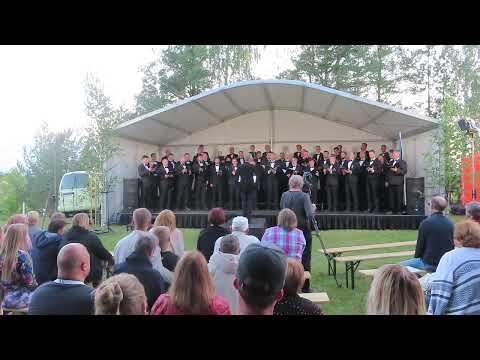

The preview images come from YouTube’s image server (i.ytimg.com) when you reach this part of the page; the video itself loads from YouTube (youtube-nocookie.com) only when you press play.
What this page does not know
What follows is not modesty but a list: each line is a place where the sources parted or fell silent, and which this page therefore does not assert.
- On what day the Koidula monument in Pärnu was unveiled. By the monument register and the monument’s own article 6 June 1929, by the biography 9 June; the page prints both. et.wikipedia.org et.wikipedia.org
- How many brass bands played at the 1869 festival. The song festival foundation counts five, Estonian Wikipedia four; both agree on 56 players. sa.laulupidu.ee et.wikipedia.org
- Whose tune the Ema süda that is sung is. By laulud.ee Robert Theodor Hansen’s tune of 1882; by Õpetajate Leht the one Koidula’s sister Eugenie Jannsen sang to Karl August Hermann, who wrote it down. The page shows both. laulud.ee opleht.ee
- Whether 24 June 1870 is old or new style. No source says; the page prints the date as the sources give it and counts the days between the plays in one style. et.wikipedia.org
- Whether 19 February 1873, the wedding day, is old or new style. The source does not say; the page counts the Kronstadt days, 4,921, in one style. et.wikipedia.org
- Kunileid’s tunes of 1869. No score has been located, so no tune plays here and the ‘Hear the tune’ code stays silent; every tune field in festival.json is empty. en.wikipedia.org
- Whether the tunes of Sind surmani and Mu isamaa on minu arm rest on a Finnish tune. One Wikipedia article says so; the page has seen no score against which to check it, and no digitised copy of Jakobson’s Wanemuine Kandle Healed reached here. et.wikipedia.org
- How many poems Emajõe ööbik holds. No source reached here gives the count, so the box in the name figure is empty; the 32 poems of Vainulilled are one article’s count. et.wikipedia.org et.wikipedia.org
- The hundred Kronstadt poems. The figure is Elo Lindsalu’s, from her doctoral thesis; none of them is on this page, so the Kronstadt figure does not count them. naiseddotnet1.wordpress.com
- What the pseudonymous letter of 1866 to Kreutzwald said, and what she wrote to Jakob Hurt. By the Literary Museum’s timeline those letters are lost; the surviving correspondence begins on 7 November 1867. kreutzwald.kirmus.ee
- Where exactly the grave in Kronstadt was. By Postimees it was lost in the years of devastation; in 1946 the family plot was found and the poet’s remains brought to Tallinn, and the page names no site. tartu.postimees.ee
- From which year Mu isamaa on minu arm has closed every general song festival. The Estonian sources say 1965, English Wikipedia 1947; the page does not choose, and there is no list here of the festivals the song has closed. kultuur.postimees.ee en.wikipedia.org
- The children’s birth years, 1874, 1876 and 1878. They stand on the timeline by the biography article and have not been checked against a second source; on the Kronstadt figure 1874 sits at the first day of the year. et.wikipedia.org
- How long the correspondence with Kreutzwald lasted. The Literary Museum’s timeline says six years (‘6 aastat kestnud’), the publisher of the 2023 edition seven (‘seitse aastat kestnud’); from the first surviving letter to the last is five years and eight months, 2 074 days. The page prints the computed span and attributes the six to the museum and the seven to the publisher. kreutzwald.kirmus.ee pood.kirmus.ee
- 6 of 7 poems are excerpts; 1 is here in full. poems
- 2 of 5 letters are undated; the letters figure sets them beside the rule. letters
- 7 of 7 songs have no tune here to play; no tune sounds on this page. songs
- 1 of 4 plays has no premiere in our sources. theatre
- 1 saying carries the tag ‘attributed’: the wording is a newspaper’s, not taken from a letter. words
- 2 places, Vanemuine Society house, Jaama 14, Tartu and Ressource garden, Tartu, sit at the city’s coordinate on the map because no source gives them one of their own. map
- 4 entries in the page’s files are flagged ‘the sources part’: the monument’s day (in two places), the count of brass bands and the tune of Ema süda. legacy
What is not asserted here: that the sun on the first screen is the one that rose on the morning she was born — it is the sun computed over Vändra for today’s clock, whose only historical point is noon on 24 XII 1843; that the 4 921 days at Kronstadt were an unhappy time — that is a count of days between two dates, not a judgement; that iamb and trochee are a scholar’s verdict — they are this page’s own syllable counts, whose rule is printed beside each poem; and that Kunileid’s tune sounds here as it did in 1869 — no tune plays here at all, because no score has been located.
Sources and further reading
- Estonian Wikipedia: Lydia Koidula (wording adapted, CC BY-SA 4.0)
- English Wikipedia: Lydia Koidula (wording adapted, CC BY-SA 4.0)
- Estonian Writers’ Museums Association: Lydia Koidula
- Koidula Museum, a branch of Pärnu Museum
- Kreutzwald’s Century (Estonian Literary Museum): Lydia Koidula 1843–1886
- Estonian Writers’ Online Dictionary (EWOD): Koidula
- Estonian Wikisource: Lydia Koidula’s public-domain texts
- DIGAR: the 1867 print of Emajõe ööbik
- Keel ja Kirjandus: ‘Koidula kirjad’
- K. A. Hermann, Eesti kirjanduse ajalugu (1898): the chapter on Koidula