Linnutee · The Birds’ Way, the Milky Way
Lennart Meri
, Tallinn , Tallinn
Explorer of the Finno-Ugric north, documentary filmmaker, historian of where Estonians came from, and the President who steered a small country back into Europe.
01The journeyRännak
01 · Tallinn · 59°26′N 24°45′E
A boy from Tallinn who was sent to Siberia, and went back with a camera.
Historian, writer, filmmaker, diplomat, president. Underneath all of it: a traveller who wanted to know where his people came from.
Lennart Georg Meri was born in Tallinn on 29 March 1929, the son of the diplomat and later Shakespeare translator Georg Meri and Alice-Brigitta Engmann, who came from an Estonian-Swedish family. His childhood moved with his father's postings: he went to school at the Collège Jésus-Christ in Paris, at public school no. 164 in Berlin and at the Lycée Janson de Sailly in Paris, attending nine schools in four languages. It was a cosmopolitan beginning for a boy who would spend much of his life explaining a small northern nation to the wider world.
That world collapsed on 14 June 1941, when the Meri family was deported to Siberia in the first great Soviet deportation from the Baltic states. The father was separated from the family and sent to a camp; the twelve-year-old Lennart helped keep his mother and younger brother Hindrek alive by felling timber and by peeling potatoes in a Red Army factory. In 1946 the family came back to Estonia. Lennart finished school in Tallinn and in 1948 entered the Faculty of History and Philology at Tartu State University, graduating cum laude in 1953. The Soviet authorities would not let him work as a historian, so he became a dramaturge at the Vanemuine theatre in Tartu (1953–1955), then an editor and producer of radio plays at Estonian Radio (1955–1961), and from 1963 a screenwriter and later producer at the Tallinnfilm studio. In 1953 he married Regina Ojavere; their sons Mart and Kristjan were born in 1959 and 1966.
Travel became his way out of the closed Soviet world. A 1958 journey to the Tian Shan mountains and the deserts of Central Asia produced his first book, Kobrade ja karakurtide jälgedes (1959). In the autumn of 1960 he led an expedition of young Estonian scientists to Kamchatka, described in Tulemägede maale (1964), which was soon translated into Russian, German, Lithuanian, Polish and Finnish. Virmaliste väraval (1974), his most translated work, followed the opening of the Northeast Passage. His curiosity then turned to the peoples related to Estonians by language. The documentary Veelinnurahvas, completed in 1970 and premiered in 1972 after a journey of more than 18 000 kilometres, was the first of a series that became known as his Finno-Ugric film encyclopaedia: Linnutee tuuled (1977), which won a silver medal at the New York International Film and Television Festival in 1979, Kaleva hääled (1986), Toorumi pojad (1989) about the Khanty bear feast, and Šamaan, assembled in 1997 from footage of the Nganasan shaman Demnime filmed on the Taymyr Peninsula in 1977.
In 1976 he published Hõbevalge, the book that made him a national figure. Blending ancient seafaring sources, folklore and imagination, it argued that the prehistoric Kaali meteorite impact on Saaremaa had echoed through the myths of Europe, from the fall of Phaethon to the legends of Ultima Thule, and placed Estonians on the map of antiquity. Scholars debated its hypotheses; readers loved it. Hõbevalgem followed in 1984. As the Soviet system loosened, Meri founded the non-governmental Estonian Institute (initiative 1988, established 1989) to build cultural ties with the West, and its offices abroad served as de facto embassies until independence was restored.
On 12 April 1990 he became Foreign Minister in Edgar Savisaar's government. During the August 1991 coup he was in Helsinki, and two hours after Estonia declared the restoration of its independence on 20 August he faxed home instructions for the case to be put to the world; Estonia joined the CSCE on 10 September and the United Nations on 17 September 1991. In 1992 he married the actress Helle Pihlak; their daughter Tuule had been born in 1985. That same year he served briefly as ambassador to Finland (23 April – 10 October 1992). In the popular vote of 20 September 1992 he came second to Arnold Rüütel, but since no candidate had a majority the newly elected Riigikogu chose the President on 5 October 1992, giving Meri 59 votes to Rüütel's 31. He took the oath of office on 6 October 1992.
His presidency defined the young state. He received Pope John Paul II in Tallinn on 10 September 1993. At the Matthiae-Mahl in Hamburg on 25 February 1994 he warned Europe bluntly about Russian imperial ambitions; the deputy mayor of St Petersburg, Vladimir Putin, walked out. On 26 July 1994 in Moscow he and Boris Yeltsin signed the agreements under which the last Russian troops left Estonia on 31 August 1994. He was re-elected on 20 September 1996 by the electoral college, 196 votes to 126, and used his second term to push Estonia toward the West: remarks at the NATO summit in Madrid on 9 July 1997, the Luxembourg European Council's invitation to accession talks on 13 December 1997, and the US-Baltic Charter of Partnership signed with Bill Clinton in Washington on 16 January 1998. He received the Coudenhove-Kalergi European Prize in 1996 and was named European of the Year by the French weekly La Vie in 1998.
His term ended on 8 October 2001. He was elected to the Estonian Academy of Sciences and represented the government at the Convention on the Future of Europe in 2002–2003. He lived to see Estonia join NATO on 29 March 2004, his seventy-fifth birthday, and the European Union on 1 May 2004. Lennart Meri died of cancer at 3.40 on the morning of 14 March 2006 at the Magdaleena unit of East Tallinn Central Hospital. After a state funeral on 26 March 2006 at Kaarli Church, where he had been baptised, he was buried at Metsakalmistu in Tallinn among the graves of Lydia Koidula and Paul Keres. Since 2007 the Lennart Meri Conference has gathered the world's security thinkers in Tallinn each spring, and since 29 March 2009 Tallinn Airport has carried his name. In 2025 Hõbevalge finally appeared in English as Silverwhite, half a century after the book first told Estonians who they might be.
Father: Georg Meri (1900–1983), diplomat, literary scholar and translator of Shakespeare into Estonian. Mother: Alice-Brigitta Engmann, from an Estonian-Swedish family. Brother: Hindrek-Peeter Meri (1934–2009), Auditor General of Estonia 1990–1997. Married Regina Ojavere in 1953 (sons Mart, b. 1959, and Kristjan, b. 1966); the marriage ended in 1982. Married the actress Helle Pihlak (1949–2024) in 1992; she was First Lady 1992–2001. Their daughter Tuule was born in 1985.
What this account rests on
- Office of the President, heads of state: Lennart Meri
- Estonian Writers’ Online Dictionary (University of Tartu): Lennart Meri
- Margalit Fox (The New York Times), obituary in the San Francisco Chronicle, 15 March 2006
- National Library of Estonia, “Üks Meri kõik”: life and legacy (in Estonian)
- Lennart Meri Conference: About Lennart Meri
- Wikipedia: Lennart Meri
Maa kõneleb meiega meie keeles, kuid muidugi ei ole see metsade ega vete hääl, mida kuuleme, vaid kümnete põlvkondade sosin, nende tööde ja rõõmude, vaevade ja heitluste, tõdede ja vastutõdede kauge kaja.
The land speaks to us in our language, but of course it is not the voice of forests or waters that we hear, but the whisper of dozens of generations, the distant echo of their labours and joys, their toils and struggles, their truths and counter-truths.
02Expeditions & filmsEkspeditsioonid ja filmid
02 · Agan river, Siberia · 61°30′N 74°00′E
Across the taiga and tundra, to the kindred peoples of the north.
From the 1960s Meri travelled thousands of kilometres east with a film crew, recording the languages, songs and rites of Finno-Ugric and Siberian peoples, in spite of Soviet censors who banned some of what he brought back.
-
Veelinnurahvas The Waterfowl People
Lennart Meri's first documentary (text author, scriptwriter and director), completed in 1970 and premiered in 1972, about the everyday life, ethnography, folklore and traditional culture of Finno-Ugric and Samoyedic peoples; it is structured in six chapters. Speakers of Kamas, Nenets, Khanty, Komi, Mari and Karelian were filmed in their own living environment at the turn of the 1960s/70s. The crew travelled over 18 000 km through the Altai–Sayan region, Nenets, Khanty-Mansi, Uzbekistan, the Komi Republic, Mari El, Estonia and Karelia. The film was followed by the sequel Linnutee tuuled (1977).
- Kamas
- Nenets
- Khanty
- Komi
- Mari
- Karelian
Tallinnfilm · 51 min Recognised at festivals in Sweden, Canada and the United States. Camera Sergo Rahomägi Finished in 1970, the film only premiered in 1972. source Watch Description adapted from the Estonian Wikipedia article, CC BY-SA 4.0 -
Linnutee tuuled The Winds of the Milky Way
Cultural-anthropological documentary about the ethnography and ethnogenesis of Finno-Ugric and Samoyedic peoples, a sequel to Veelinnurahvas (1970), interpreting Meri's understanding of the linguistic and cultural kinship of the Finno-Ugric peoples. Filmed in Northern Finland/Lapland, Vepsia, Votia, Mordovia, Khanty-Mansi, Hungary, the Taymyr Peninsula, Setomaa and the Estonian islands Saaremaa and Muhu. It was Tallinnfilm's first international co-production (with Finnish Mainos-TV and Hungarian television). The film was banned in the Soviet Union but received excellent reviews abroad; it was digitally restored in 2009 for Meri's 80th birthday as part of the Estonian Film 100 project.
- Sami
- Veps
- Votes
- Mordvins
- Khanty
- Hungarians
- Nganasan
- Seto
Tallinnfilm (co-production with Mainos-TV and Magyar Televízió) Silver medal at the 22nd New York International Television and Film Festival, spring 1979. Camera Rein Maran · sound Enn Säde · music Veljo Tormis Sound director Enn Säde later wrote the story of the shoot in his book Eales ei leia algust. source Watch Description adapted from the Estonian Wikipedia article, CC BY-SA 4.0 -
Kaleva hääled The Sounds of Kaleva
Three-part film-essay about memory and the historical cultural connections of the Finno-Ugric peoples: the first part treats the role of memory in culture before and after the Kalevala, the second follows the journey of Kalevala compiler Elias Lönnrot in Estonia, and the third recreates an ancient iron-smelting ritual. Filmed in 1985 in Kalevala village in Karelia, on the Agan River in Khanty-Mansi (Ob basin) and in Estonia (Tallinn, Kuusalu, Tartu, Võru, Litsmets in Võrumaa and elsewhere). Part of the Lennart Meri Finno-Ugric film encyclopaedia.
- Karelians
- Khanty
- Estonians
Eesti Telefilm · 41 min Music Veljo Tormis: the Tallinn Philharmonic Chamber Choir sings Raua needmine Description adapted from the Estonian Wikipedia article, CC BY-SA 4.0 -
Toorumi pojad The Sons of Torum
Documentary about the nearly 3 000-year-old Khanty bear feast (karupeied), an obligatory ritual after the hunt of a bear, regarded as the Khanty's ancestor, lasting four to five days with dressing, feeding and entertaining the bear through wrestling, songs and dances. Filmed in September 1985 and August 1988 in Western Siberia, Khanty-Mansi Autonomous Okrug, on the banks of the Agan River (an Ob tributary) at the Tyltchiny summer camp. More than 18 hours of material were recorded, from which Meri intended to edit about six hours of scientific film; the material was kept for 20 years at the Göttingen institute in Germany and returned to the Estonian Film Archive in February 2010.
- Khanty
Eesti Telefilm · 61 min Grand Prize for best popular-science film at the Soviet Estonia Film Festival, 1990. Watch Description adapted from the Estonian Wikipedia article, CC BY-SA 4.0 -
Šamaan The Shaman
Anthropological documentary recording the incantation ritual of the ninth-generation Nganasan shaman Demnime (1913–1980), aged 64 at the time. Shot on 16 July 1977 on the Avam River on the Taymyr Peninsula, the northernmost corner of Eurasia, during the filming of Linnutee tuuled; the film was assembled from material left out of that film and completed 20 years later, in 1997.
- Nganasan
Lennart Meri / Eesti Telefilm · 20 min Description adapted from the Estonian Wikipedia article, CC BY-SA 4.0
Kindred peoples
The peoples he filmed, strung along the Birds’ Way.
Every star is a people whose language is kin to Estonian, laid west to east and joined by branch. The empty rings are languages that have fallen silent since the camera ran.
Choose a people
Kindred words the same word, from the Baltic to the Taymyr
Living language Endangered Critically endangered Fallen silent star size: number of speakers
- Estonians · eestlased · Finnic · Living language · about 1.1 million speakers Filmed at home: Tallinn, Kuusalu, Tartu and Võrumaa for Kaleva hääled (1986). Filmed in Kaleva hääled (1986)
- Seto · setoq · Finnic · Endangered · about 12 000 speakers of Seto, a South Estonian variety Setomaa was one of the stops of Linnutee tuuled (1977). Filmed in Linnutee tuuled (1977)
- Votes · vaďďalaizõd · Finnic · Critically endangered · fewer than ten speakers remain in Ingria The crew was among the Votes on 17 May 1977 while shooting Linnutee tuuled. Filmed in Linnutee tuuled (1977)
- Veps · vepsläižed · Finnic · Endangered · a few thousand speakers around Lake Onega Filmed for Linnutee tuuled (1977). Filmed in Linnutee tuuled (1977)
- Karelians · karjalazet · Finnic · Endangered · some tens of thousands of speakers in Karelia and Finland Kalevala village in Karelia, where Lönnrot collected runes, is one of the settings of Kaleva hääled (1986). Filmed in Veelinnurahvas (1970), Kaleva hääled (1986)
- Sami · sámit · Sami · Endangered · nine living Sami languages, all endangered, some with only a handful of speakers Filmed in Lapland for Linnutee tuuled (1977); the Sami chapter is also available as a separate excerpt. Filmed in Linnutee tuuled (1977)
- Hungarians · magyarok · Ugric · Living language · about 13 million speakers; the largest Uralic language Hungarian television co-produced Linnutee tuuled (1977). Filmed in Linnutee tuuled (1977)
- Mordvins · erźat · mokšet · Mordvinic · Endangered · Erzya and Moksha, a few hundred thousand speakers on the Volga Filmed in Mordovia for Linnutee tuuled (1977). Filmed in Linnutee tuuled (1977)
- Mari · marij · Mari · Endangered · a few hundred thousand speakers in Mari El and beyond Filmed in Mari El for Veelinnurahvas (1970). Filmed in Veelinnurahvas (1970)
- Komi · komi · Permic · Endangered · roughly a hundred and fifty thousand speakers in the Komi Republic Filmed in the Komi Republic for Veelinnurahvas (1970). Filmed in Veelinnurahvas (1970)
- Khanty · hanti · Ugric · Endangered · under ten thousand speakers along the Ob and its tributaries The Khanty appear in four of his films; on the Agan river he filmed Kaleva hääled (1986) and the bear feast of Toorumi pojad (1989). Filmed in Veelinnurahvas (1970), Linnutee tuuled (1977), Kaleva hääled (1986), Toorumi pojad (1989)
- Nenets · neneć · Samoyedic · Endangered · about twenty thousand speakers of Tundra Nenets; Forest Nenets has far fewer Filmed on the Yamal peninsula for Veelinnurahvas (1970). Filmed in Veelinnurahvas (1970)
- Nganasan · ńa · Samoyedic · Critically endangered · only around a hundred speakers remain on the Taymyr peninsula The northernmost people of Eurasia; Šamaan (1997) was cut from footage shot on the Avam river in 1977. Filmed in Linnutee tuuled (1977), Šamaan (1997)
- Kamas · Samoyedic · Fallen silent · no speakers since 1989 Filmed at Abalakovo in the Sayan foothills for Veelinnurahvas (1970). The last speaker, Klavdiya Plotnikova, died in 1989. Filmed in Veelinnurahvas (1970)
- silm · eye · reconstructed Proto-Uralic *śilmä · Estonians: silm · Seto: silm · Votes: silmä · Veps: sil’m · Karelians: silmä · Sami: čalbmi · Hungarians: szem · Mordvins: śel’me · Mari: šinča · Komi: śin · Khanty: sem · Nenets: sæw · Nganasan: śejmɨ · Kamas: sima
- nimi · name · reconstructed Proto-Uralic *nimi · Estonians: nimi · Seto: nimi · Votes: nimi · Veps: nimi · Karelians: nimi · Sami: namma · Hungarians: név · Mordvins: lem · Mari: lüm · Komi: ńim · Khanty: nem · Nenets: ńum · Nganasan: ńim · Kamas: nim
- kala · fish · reconstructed Proto-Uralic *kala · Estonians: kala · Seto: kala · Votes: kala · Veps: kala · Karelians: kala · Sami: guolli · Hungarians: hal · Mordvins: kal · Mari: kol · Komi: a different word · Khanty: χul · Nenets: xalʲa · Nganasan: kolɨ · Kamas: kola
- käsi · hand · reconstructed Proto-Uralic *käte · Estonians: käsi · Seto: käsi · Votes: tšäsi · Veps: käzi · Karelians: käsi · Sami: giehta · Hungarians: kéz · Mordvins: keď · Mari: kit · Komi: ki · Khanty: köt · Nenets: ŋuda · Nganasan: juta · Kamas: uda
- vesi · water · reconstructed Proto-Uralic *weti ~ *wete · Estonians: vesi · Seto: vesi · Votes: vesi · Veps: vezi · Karelians: vesi · Sami: a different word · Hungarians: víz · Mordvins: veď · Mari: wüt · Komi: va · Khanty: a different word · Nenets: a different word · Nganasan: bɨʔ · Kamas: bü
03OriginsPäritolu
03 · Kaali, Saaremaa · 58°22′N 22°40′E
A meteorite fell on Saaremaa, and he heard it in the old songs.
In Hõbevalge (1976) Meri read myth, trade routes and geology together to ask where Estonians came from, and whether the Kaali impact still echoed in the memory of the north.
Meri's most significant work: a semi-scientific, imaginative journey into the deep past of Estonians and the western Finno-Ugrians. It opens with the Kaali meteorite striking Saaremaa around 1500 BC with a blast likened to the Hiroshima bomb, and argues that the memory of that falling fire survives in northern folklore, in the Kalevala and the Edda. From there Meri proposes that Saaremaa is the mythical Ultima Thule reached by the Greek explorer Pytheas in the 4th century BC, drawn north along the ancient amber routes that linked the Baltic to the Mediterranean and Near East, and that Pytheas's 'place where the sun goes to sleep' points to the Kaali crater. On publication it quickly became a popular and central work of Estonian literature; literary scholar Jaan Undusk has called it Meri's 'worldview work', a worldview whose sacred site is the Kaali crater, after which Meri was ready to bring Estonia back to Europe.
- Kaali crater
- 58°22′N 22°40′E · Saaremaa
- Main crater
- ~110 m wide, a lake at the bottom
- Impact
- Bronze Age, roughly 3,500 years ago
- Meri’s thesis
- The fall was seen, and survived in myth: a sun that fell, a fire in the sky.
- Sequel
- Hõbevalgem, 1984

„Ma kadestan loodusjõude, koski, vulkaane, tuult selle mõju pärast, mis neil inimestele on,“ ütles keegi kunstnik, ja kõigist loodusjõududest on meri kõige võimsam, aga ka inimlähedasem. Viie tuhande aasta eest jõudsime tema äärde, lükkasime kõrvale metsa rohelise eesriide ja tardusime paigale. Siin me nüüd oleme, ja kõik me kanname endas mere märke.
“I envy the forces of nature — waterfalls, volcanoes, the wind — for the effect they have on people,” some artist said; and of all the forces of nature the sea is the mightiest, but also the closest to man. Five thousand years ago we reached its shore, pushed aside the green curtain of the forest and stood still. Here we are now, and all of us carry the marks of the sea within us.
04BooksRaamatud
04 · Kabelineem, Viimsi · 59°33′N 24°50′E
Travel books that became histories, histories that read like travel.
He wrote the way he travelled: by looking closely, asking the old people, and following the river to its source.
-
Kobrade ja karakurtide jälgedes. Kesk-Aasia matkamärkmeid On the Path of Cobras and Steppe Spiders. Central Asian Travel Notes
Meri's first book, born of a 1958 expedition to the Tian Shan mountains and the old Islamic centres of the Kara Kum desert. Written largely as a journey on foot, it moves from cotton-growing cities to mountain passes and desert crossings by camel and river boat, in the observant, historically curious voice that would define all his later travel writing. The book was warmly received and launched Meri's reputation as a travel writer.
158 pages, illustrated by Ants Viidalepp. Soft cover, standard format.
Source -
Laevapoisid rohelisel ookeanil Boat-boys on a Green Ocean
An account of a kayak journey through Siberia and Yakutia, the 'green ocean' being the endless taiga through which the rivers run. It is one of Meri's early travelogues in the conventional sense, before his books grew into the historical-cultural essays for which he became known, and it helped establish him as a travel writer before he turned to filmmaking and politics.
175 pages, illustrations by A. Viidalepp.
Source -
Tulemägede maale. Reisipäevik 160. meridiaanilt To the Land of Volcanoes. Travel Diary from the 160th Meridian
The travel diary of an expedition to Kamchatka. The book’s own annotation calls it a literary report on a scientific experiment, the first Estonian research journey organised on a voluntary footing, to which ten young men gave their summer holiday in little-studied corners of the Far East. The Kamchatka book became his first major international breakthrough and was soon translated into Russian, German, Lithuanian and Polish, and later into Finnish.
Translations: Russian, German, Lithuanian, Polish, Finnish (Kamtšatka: tulivuorten maa, Gummerus 1988)
264 pages, cover design by N. Kormašov. An expanded second edition appeared in 1977 under the title Lähenevad rannad ('Approaching Shores'). The 1960 Estonian youth expedition to Kamchatka that the book records was led by Meri himself.
Source -
Virmaliste väraval At the Gate of the Northern Lights
A travel book from the Northeast Passage. In his author’s note Meri says he drew largely on the writings of earlier travellers — Cook, Forster, Wrangel and others — and on his own travel diaries, and adds that the book is nevertheless not a history of the Passage’s discovery.
Translations: Finnish (Revontulten porteilla, Gummerus, 1977), Russian
328 pages, designed by Vive Tolli.
Source -
Hõbevalge. Reisikiri tuulest ja muinasluulest Silverwhite. A Travelogue of Wind and Ancient Poetry
Meri's most significant work: a semi-scientific, imaginative journey into the deep past of Estonians and the western Finno-Ugrians. It opens with the Kaali meteorite striking Saaremaa around 1500 BC with a blast likened to the Hiroshima bomb, and argues that the memory of that falling fire survives in northern folklore, in the Kalevala and the Edda. From there Meri proposes that Saaremaa is the mythical Ultima Thule reached by the Greek explorer Pytheas in the 4th century BC, drawn north along the ancient amber routes that linked the Baltic to the Mediterranean and Near East, and that Pytheas's 'place where the sun goes to sleep' points to the Kaali crater. On publication it quickly became a popular and central work of Estonian literature; literary scholar Jaan Undusk has called it Meri's 'worldview work', a worldview whose sacred site is the Kaali crater, after which Meri was ready to bring Estonia back to Europe.
Translations: Finnish (Hopeanvalkea, 1983), Russian (2020), Italian (2016, tr. Daniele Monticelli), English (Silverwhite: The Journey to the Fallen Sun, Hurst 2025, tr. Adam Cullen)
Reception: the identification of Thule with Saaremaa became widespread at the popular level and the Kaali thesis spread into Estonian and Nordic folklore studies, while the classicist Jaan Unt argued strongly against it and the historian Herbert Ligi was its most consistent critic. The literary scholar Jaan Undusk has called it Meri’s ‘worldview work’. A combined edition of Hõbevalge and Hõbevalgem, edited by Urmas Sutrop and Mart Meri from the author’s own notes, appeared in 2008; Meri had refused reprints during his lifetime because he wanted to revise the text.
Source -
Hõbevalgem. Reisikiri suurest paugust, tuulest ja muinasluulest Silverwhiter. A Travelogue of the Big Bang, Wind and Ancient Poetry
Presented by the author as the introduction and first chapter of Hõbevalge rewritten seven years on: much of the material is the same, but facts are clarified and supplemented and new information is added that could not be used the first time. The book concentrates above all on the figure of Pytheas and his voyage into northern Europe. When he published this improved version of the theory, Meri believed he had settled the questions of Kaali, Ultima Thule and Pytheas.
Translations: Finnish
216 pages. Its text was merged with Hõbevalge in the 2008 combined edition edited by Urmas Sutrop and Mart Meri.
Description adapted from the Estonian Wikipedia article, CC BY-SA 4.0
-
Tulen maasta, jonka nimi on Viro I Come from a Land Called Estonia
A Finnish-language collection of Meri's presidential speeches, edited by Piret Saluri and translated into Finnish by Juhani Salokannel, addressed to the Finnish public in the years of Estonia's re-emergence. Chapters include 'Viro, toivorikkaana sinä seisot tulevaisuutesi ovella', 'Valtio ei synny helposti eikä nopeasti', 'Kulttuuri on politiikka ja politiikka kulttuuri', 'Mistä me tulemme, minne olemme menossa', 'Baltian maat: yhdentyvän Euroopan koetinkivi', 'Virossa ei ole enää vieraita sotavoimia' and the title chapter.
Translations: Finnish
The title echoes Meri's insistence on the Finnish word 'Viro' for Estonia, a word suppressed in occupied Estonia.
Source -
Presidendikõned Presidential Speeches
Published at the close of Meri's first term, this 592-page volume of the 'Eesti mõttelugu' series falls into two parts: a selection of his articles, speeches and interviews on journalism, literature, history, film, travel, urban planning, environmental protection and politics, followed by the speeches of 1990–1996, from foreign minister to head of state. It is the first of three Meri volumes in the series.
Edited by Edvin Hiedel, Andres Langemets and Henno Rajandi; foreword by Hando Runnel; afterword by former Swedish prime minister Carl Bildt. ISBN 9985821505. Second printing 2005.
Description adapted from the Estonian Wikipedia article, CC BY-SA 4.0
-
Riigimured Cares of State
The speeches of Meri's second presidential term, October 1996 to October 2001, delivered at home and abroad, collected as volume 41 of the 'Eesti mõttelugu' series. It documents the years in which Estonia moved towards NATO and the European Union.
Compiled, with an afterword, by Toomas Kiho; foreword by Hando Runnel; design by Kaljo Põllu.
Source -
Poliitiline testament Political Testament
The third and posthumous Meri volume in the 'Eesti mõttelugu' series, gathering the speeches he gave in various countries and on many themes after leaving office in 2001. The volume was compiled by his former adviser Toomas Hiio and his son Mart Meri.
271 pages, ISBN 9789985772584, cover design by Kaljo Põllu. Launched at Kabelineem on the Viimsi peninsula, President Meri's home.
Source -
Lennart Meri ütlemisi Sayings of Lennart Meri
A posthumous hardcover collection of Meri's aphorisms and memorable sentences, drawn from his speeches and public appearances, articles and memoirs, and from his literary works, compiled by Toomas Kiho.
192 pages, ISBN 9789949565092.
Source
05WordsSõnad
05 · Toompea, Tallinn · 59°26′N 24°44′E
He said things nobody else dared to say, and made them sound like common sense.
His Estonian words stand as he said or wrote them, with English beneath; what he said in German or Finnish stands here in translation, and the note under it says whose. The English is this page’s own translation unless the note names another. Every quote links to where it was found.
Olukord on sitt, kuid see on meie tuleviku väetis.
The situation is shit, but it is the fertiliser of our future.
-
Eesti on soomlasele ainus koht maailmas, kus liha on liha ja kala kala, veri on veri ja vesi vesi, ning peegelpildis kehtib see ka eestlase suhtes.
For a Finn, Estonia is the only place in the world where meat is meat and fish is fish, blood is blood and water is water — and in mirror image the same holds for the Estonian.
Humour Speech at the reception for President Ahtisaari, Tallinn, 31 May 1994 source From his speech at the official reception for Finnish President Martti Ahtisaari's state visit, 31 May 1994; the sentence is engraved on the 'Meremärk' monument to Meri in the courtyard of the Estonian Embassy in Helsinki (a pun on Finnish–Estonian false friends).
-
Eestile on kombeks üks president korraga.
It is Estonia's custom to have one president at a time.
Leadership Statement, early 1990s (Vikerraadio, “Lennart Meri ütles”) source Said during his early-1990s power struggle with Prime Minister Mart Laar, to make clear who was head of state; ERR's Vikerraadio devoted an episode of 'Lennart Meri ütles' to it.
-
Euroopa ei ole supp, vaid mosaiik, kus igal kivikesel, kuitahes väikesel, on oma värv.
Europe is not a soup but a mosaic, in which every stone, however small, has its own colour.
Europe ERR, “Lennart Meri oli Eesti riigi tasakaalustaja” source Reported in ERR’s 2006 obituary ‘Lennart Meri oli Eesti riigi tasakaalustaja’.
-
Euroopa vajab Pearut ja Andrest, Paul Aristet, Jaan Einastot ja Endel Lippmaad, mitte Eestis villitud kokakoolat.
Europe needs Pearu and Andres, Paul Ariste, Jaan Einasto and Endel Lippmaa, not Coca-Cola bottled in Estonia.
Europe Statement, 2000 (et.wikiquote) source Said in 2000; Pearu and Andres are the feuding farmers of Tammsaare's 'Tõde ja õigus', the others a linguist and two scientists — Meri's argument that Estonia's value to Europe is its culture and science.
-
See, kes tahab täna Vene riiki ja vene rahvast tõepoolest aidata, peab järjekindlalt veenma Vene juhtkonda, et imperialistlike ekspansioonide aeg on möödas.
[Those] who want today to really help the Russian state and the Russian people should consistently convince the Russian leadership that the time of imperialist expansions is over.
Russia Matthiae-Mahl speech, Hamburg, 25 February 1994 source From the Hamburg Matthiae-Mahl speech of 1994, said in German. The English is as Lauri Mälksoo quotes it in his Lennart Meri Lecture 2026, published by ICDS and linked here; the Office of the President’s own English translation words the sentence differently. The Estonian is the text of the Office’s speech archive, as ERR republished it in 2024.
-
Lääs ei oska tajuda seda, mis käärib praegu Venemaa avarustes.
The West is unable to perceive what is now fermenting in the vast spaces of Russia.
Russia Matthiae-Mahl speech, Hamburg, 25 February 1994 (ERR republication) source From his Matthiae-Mahl address at Hamburg City Hall, 25 Feb 1994, warning of Russian neo-imperialism; St Petersburg deputy mayor Vladimir Putin walked out of the hall. The Estonian text is as republished by ERR in 2024; the English is this page’s translation of it.
-
„Ma kadestan loodusjõude, koski, vulkaane, tuult selle mõju pärast, mis neil inimestele on,“ ütles keegi kunstnik, ja kõigist loodusjõududest on meri kõige võimsam, aga ka inimlähedasem. Viie tuhande aasta eest jõudsime tema äärde, lükkasime kõrvale metsa rohelise eesriide ja tardusime paigale. Siin me nüüd oleme, ja kõik me kanname endas mere märke.
“I envy the forces of nature — waterfalls, volcanoes, the wind — for the effect they have on people,” some artist said; and of all the forces of nature the sea is the mightiest, but also the closest to man. Five thousand years ago we reached its shore, pushed aside the green curtain of the forest and stood still. Here we are now, and all of us carry the marks of the sea within us.
Nature Hõbevalge. Reisikiri tuulest ja muinasluulest (1976) source Famous passage from 'Hõbevalge' (1976), his essayistic history of the Baltic Sea peoples; the last sentence gave Sirp a headline ('Kõik me kanname endas mere märke'). The English is this page’s own translation; the book’s published English translation is Adam Cullen’s Silverwhite (Hurst, 2025).
-
Ida on palju rohkem mõtteviis kui ilmakaar.
The East is far more a way of thinking than a point of the compass.
Russia Postimees, “Lennart Meri 26 tsitaati” source On Russia and the mentality of empire; included in Postimees's 26 quotes.
-
Inimene toimib edukalt ainult niisuguses keskkonnas, mille põhjuslikke seoseid ta mõistab või arvab mõistvat.
A person acts successfully only in an environment whose causal connections he understands, or believes he understands.
Leadership et.wikiquote source Reflection on why people need to understand the world they act in; quoted on et.wikiquote and pistik.net.
-
Julgeolek ei allu aritmeetilisele loogikale, vaid sõltub poliitilisest tahtest.
Security does not obey arithmetical logic; it depends on political will.
Leadership Sõnumileht, 18 February 1997 source Published in Sõnumileht on 18 February 1997, during the debate on NATO enlargement to the Baltic states.
-
Julgeolekugarantiisid saab ühele riigile anda ainult tema rahvas ise.
Security guarantees can be given to a state only by its own people.
Freedom Speech at CSIS, Washington, June 1996 (Sõnumileht 29.06.1996) source From his speech at the Center for Strategic and International Studies in Washington, reported by BNS in Sõnumileht on 29 June 1996.
-
Pane sitta sellele kapsale, mis kasvab.
Put the manure on the cabbage that is growing.
Humour Saying, quoted at tsitaadid.ee source A farmer’s rule he applied to the economy: back what already thrives instead of propping up what does not.
-
Keel on võimas realiteet ja keelesugulus äratab tugevaid tundeid.
Language is a powerful reality, and linguistic kinship awakens strong feelings.
Language Hõbevalgem (1984) source From his writing on Finno-Ugric kinship; attributed by tsitaat.com to Hõbevalgem (1984).
-
Kogemustega on juba kord nii, et neid leiab ainult minevikust.
The thing about experiences is that they can only be found in the past.
Memory Postimees, “Lennart Meri 26 tsitaati” source Aphorism included in Postimees's collection of 26 Meri quotes and in ERR News's list of his sayings. The English is ERR News’s wording.
-
Kõigist raskustest hoolimata on Eesti õppinud selgeks ühe olulise tõe: kui tahad, et sind koheldakse riigina, tuleb ka käituda riigina.
Despite all difficulties, Estonia has learned one important truth: if you want to be treated as a state, you must also behave like a state.
Estonia tsitaadid.ee, Postimees 26 tsitaati source On Estonia's early statehood; listed among his quotes on Estonia.
-
Kõikjal räägitakse kommunismi surmast, aga keegi ei ole veel näinud kommunismi laipa.
The death of communism is being proclaimed everywhere, but no one has yet seen the corpse.
History Statement, 1996 source Dated 1996 by tsitaadid.ee; a grave joke about the persistence of communist structures after 1991. The English is adapted from ERR News’s wording.
-
Kunst on kultuuri geen, mis iseennast taastoodab ja niiviisi kultuuri kasvatab, ainsat keskkonda, milles inimese vaim saab hingata.
Art is the gene of culture, which reproduces itself and thereby grows culture, the only environment in which the human spirit can breathe.
Memory Lennart Meri ütlemisi source On the necessity of art; et.wikiquote cites it with page numbers 22–23 of a printed source, and it appears in the book 'Lennart Meri ütlemisi'.
-
Ma ei ole veel ühtegi kindralit näinud, kes oskaks lehma lüpsta.
I have yet to see a general who knows how to milk a cow.
Humour Postimees, “Lennart Meri 26 tsitaati” source A jab at the military establishment, included in Postimees's 26-quote collection and ERR News's 12 sayings. The English is ERR News’s wording.
-
Ma ei või ära segada õiglust kättemaksuga.
I must not confuse justice with revenge.
Leadership tsitaadid.ee, Postimees 26 tsitaati source On dealing with the Soviet past; Postimees and tsitaadid.ee list it among his key statements on governance.
-
Maa kõneleb meiega meie keeles, kuid muidugi ei ole see metsade ega vete hääl, mida kuuleme, vaid kümnete põlvkondade sosin, nende tööde ja rõõmude, vaevade ja heitluste, tõdede ja vastutõdede kauge kaja.
The land speaks to us in our language, but of course it is not the voice of forests or waters that we hear, but the whisper of dozens of generations, the distant echo of their labours and joys, their toils and struggles, their truths and counter-truths.
Language Independence Day speech, 24 February 1999 source From his Independence Day speech at the Estonia Concert Hall, as cited by et.wikiquote and quoted by Eesti Kirik and Nõmme Museum.
-
Meie ülim eesmärk on korraldada oma suhted Venemaaga euroopalikul moel.
Our ultimate aim is to arrange our relations with Russia in a European manner.
Russia Independence Day speech, 24 February 1993 (Postimees republication) source From his first Independence Day speech as president, Estonia Concert Hall, 24 February 1993 (the sentence continues: as friendly and cooperative as the relations restored with Germany, France, the Nordic countries, Finland, Canada and the USA); Postimees republished the speech under this headline.
-
…meie vajumine viiekümneks aastaks okupatsiooniookeani pimedasse olematusse, kust me õhku ahmides kaldale jõudsime, vabadus, võrdsus, vendlus endist viisi hammaste vahel.
…our sinking for fifty years into the dark nothingness of the ocean of occupation, from which we reached the shore gasping for air, liberty, equality, fraternity still clenched between our teeth.
Freedom Independence Day address, Estonia concert hall, 24 February 1996 (speech archive of the Office of the President, archived copy) source From his Independence Day address at the Estonia concert hall, 24 February 1996. In the Office of the President’s text the sentence begins “Eesti tugevus on isegi meie sukeldumisrekord, meie vajumine viiekümneks aastaks…” (Estonia’s strength is even our diving record, our sinking for fifty years…); the Postimees reprint of the speech leaves out the words “meie vajumine”.
-
Meist igaühest sõltub Eesti püsimine.
Estonia's survival depends on each and every one of us.
Estonia tsitaadid.ee; ERR News, “12 Sayings from Estonia’s Former President Meri” source One of Meri's most-quoted lines, used as the title of a children's biography of him; ERR News lists it among his 12 best-known sayings. The English is ERR News’s wording.
-
Kõigist loodusjõududest on meri kõige võimsam, aga ka inimlähedasem.
Of all the forces of nature the sea is the mightiest, but also the closest to man.
Nature Hõbevalge source From Hõbevalge (1976), on a people who came down to the shore five thousand years ago and never lost the marks of the sea. The English is this page’s own translation; the book’s published English translation is Adam Cullen’s Silverwhite (Hurst, 2025).
-
Muutuvas maailmas võidab see, kes maailmaga koos käib, käib natukene kiiremini kui maailm.
In a changing world, the winner is the one who moves with the world — and moves a little faster than the world.
Future Postimees, “Lennart Meri 26 tsitaati” source Opening of a longer passage on foresight (it continues that such a person gets ahead of the world and can anticipate the problems life sets); included in Postimees's 26 quotes and the book 'Lennart Meri ütlemisi'.
-
Olukord on sitt, kuid see on meie tuleviku väetis.
The situation is shit, but it is the fertiliser of our future.
Future Sõnumileht, 18 February 1997; ERR archive, “Lennart Meri ütles” source Said in 1997, during a hard economic and political year; ERR's radio archive devotes an episode of its 'Lennart Meri ütles' series to it and et.wikiquote cites Sõnumileht no. 40, 18 Feb 1997. The popular variant with 'aga' instead of 'kuid' circulates widely; the ERR archive title uses 'kuid'.
-
On väga lihtne rääkida juttu, mis kõigile meeldib. Palju raskem on rääkida juttu, mis on tõde.
It is very easy to say things that everyone likes. It is much harder to say things that are true.
Leadership tsitaadid.ee source Aphorism on political speech; appears in Postimees's 26-quote collection and the book 'Lennart Meri ütlemisi'.
-
Rahvaluule, olgu siis rahvalaulud, rahvatantsud või rahvamuusika on rahva kirjutamata ajalugu.
Folklore — whether folk songs, folk dances or folk music — is the unwritten history of a people.
Memory tsitaat.com source Widely used by Estonian folk-culture organisations (e.g. Eesti Rahvakultuuri Keskus) as Meri's definition of folklore.
-
Raskel ajal on ka perse laululind.
In hard times even the arse is a songbird.
Humour tsitaadid.ee source Earthy proverb-style joke he used to make light of hardship; filed under 'Naljakad' (funny) on tsitaadid.ee and in Postimees's 26 quotes.
-
Eesti riik on kulukas ja Eesti riik on kallis. Ta on kulukas kodaniku rahataskule ja ta on kallis kodaniku südamele.
The Estonian state is costly and the Estonian state is dear. It is costly to the citizen's wallet and dear to the citizen's heart.
Estonia Speech at the opening of the Riigikogu session, 10 September 2001 source From his address at the opening of the IX Riigikogu's autumn session, one of his last speeches as president. The English follows ERR News’s wording in part.
-
Venemaa ei ole veel täielikult mõistnud uue ajastu pakutavaid võimalusi. Paistab, et mõned Moskva poliitikud usuvad ikka veel, et kahepoolsetes suhetes on üks võitev pool ja teine, kes kaotab. Mul tarvitseb nimetada vaid ühte näidet: Tšetšeenia.
Russia has not yet fully understood the opportunities offered by the new era. It appears that some Moscow politicians still believe that in bilateral relations there is one winning party and another that loses. I need only mention one example: Chechnya.
Russia Speech at the University of Jyväskylä, 8 November 1999 source From his speech at the University of Jyväskylä on 8 November 1999, at an event marking ten years since the end of the Cold War. Recorded on fi.wikiquote in Finnish: ‘Venäjä ei ole vielä täysin ymmärtänyt uuden aikakauden tarjoamia mahdollisuuksia. Vaikuttaa siltä, että jotkut Moskovan poliitikot yhä uskovat, että kahdenkeskisissä suhteissa on yksi voittava osapuoli ja toinen puoli, joka häviää. Minun tarvitsee mainita ainoastaan yksi esimerkki: Tšetšenia.’ The English and the Estonian are this page’s renderings.
-
See kujutlus, et Stalinite ja Hitlerite aeg on möödas, on ohtlik.
The notion that the time of Stalins and Hitlers is over is dangerous.
History Statement, 1999 source Warning made in 1999 while president; ERR News lists it among his best-known sayings. The English is ERR News’s wording.
-
Sotsiaalse ebavõrdsuse kahandamise kõige tõhusam viis on haridusse investeerimine.
The most effective way to reduce social inequality is to invest in education.
Future tsitaat.com; ERR News '12 Sayings' source Policy maxim from his presidency; listed in ERR News's 12 sayings.
-
Supertanker vajab 16 meremiili, et ümber pöörata, kuid eskimod võivad teha täispöörde koha peal.
A supertanker needs 16 nautical miles to turn around, but the Inuit can do a full turn on the spot.
Estonia tsitaat.com; ERR News '12 Sayings' source His favourite image for the agility of a small state versus a large one, drawing on his Arctic travels.
-
Tegelikult mängivad väikeriigid Euroopa Unioonis samasugust rolli nagu hea õli auto mootoris.
In fact, small states play the same role in the European Union as good oil in a car engine.
Europe Interview, Luup, 22 December 1997 source From an interview in the magazine Luup, 22 December 1997.
-
Teie, noored, lähete elust läbi nagu nuga võist!
You young people will go through life like a knife through butter!
Humour tsitaadid.ee; ERR News '12 Sayings' source Addressed to young people; a staple of Estonian school quote lists and ERR News's list of his sayings. The English follows ERR News’s wording.
-
Balti rahvad – eestlased, lätlased ja leedulased – okupeeriti ja annekteeriti nende tahte vastaselt ja rahvusvahelist õigust rikkudes 1940. aastal ja uuesti 1944. aastal ning viidi seejärel viie aastakümne sovetiseerimise ja venestamisega oma rahvusliku olemasolu piirini.
The Baltic nations – Estonians, Latvians and Lithuanians – were occupied and annexed against their will and contrary to international law, in 1940, and once again in 1944, and subsequently brought to the limit of their national existence through five decades of sovietisation and russification.
History Matthiae-Mahl speech, Hamburg, 25 February 1994 source Said in German. The English is the Office of the President’s official translation, which Paul Goble reproduces from the Office’s archive in the Estonian World article linked here; the Estonian is this page’s translation.
-
Tule taevas appi!
Heaven help us!
Humour Independence Day speech, 24 February 2001 source His exasperated comment in his final Independence Day speech at the Estonia Theatre, 24 February 2001, on the scandal in which politicians Mart Laar and Robert Lepikson had shot at a photo of Edgar Savisaar; ERR's archive devotes a 'Lennart Meri ütles' episode to it.
-
Usaldus ei ole kaasavaram, mida on kogutud sukasäärde, kuni see on saanud täis. Usaldust tuleb igal jumalahommikul uuendada, päevast päeva taastata, kasvatada nagu kapitali ja hoida nagu algkapitali.
Trust is not a dowry hoarded in a stocking until it is full. Trust must be renewed every blessed morning, restored day by day, grown like capital and guarded like seed capital.
Leadership tsitaadid.ee; president.ee source On the relationship between the state and its citizens; quoted on president.ee's Meri page and quote collections.
-
Vigadel on niisugune omadus, et inimene kipub ühte viga teise veaga varjama, mistõttu teine viga peab alati suurem olema kui esimene.
Mistakes have this property: a person tends to cover one mistake with another, which is why the second mistake must always be bigger than the first.
Leadership Postimees, “Lennart Meri 26 tsitaati” source Aphorism included in Postimees's 26-quote collection.
-
Kui vihma sajab, ei maksa vihmavarju enne ära visata, kui uut olemas ei ole.
When it rains, do not throw away the umbrella before you have a new one.
Europe Remark during a visit to Sweden source Said during a visit to Sweden in September 1995, in reply to talk of NATO being dissolved.
Lennart legends
The stories people tell about him.
Two days after his death, Epp Petrone gathered “Lennart legends” from online comment threads and posted them on her blog “for the Estonian Literary Museum”; her readers added more underneath. Here are a few such stories, each with the person who told it.
-
Prime minister Mart Laar summed up the five-hour Kremlin talks of July 1994 in one line: Meri and Yeltsin haggled over the troop-withdrawal agreements like at a Bukhara bazaar.
told by Mart Laar · 1994 Postimees
-
Meri liked to tell how, filming in Lapland with cameraman Rein Maran, the crew reached a customs house, the only building for kilometres. When the old customs officer heard the snow-covered visitors were from Estonia, he jumped up and sang ‘Ants oli tubli saunamees’ in fluent Estonian.
told by Lennart Meri Vikitsitaadid
-
At Viljandi Folk in 2000 the president arrived a little late for Veljo Tormis’s concert and simply sat down in front of the benches, in the middle of a group of punks. The story was left as a comment under Epp Petrone’s post “Lennart legends for the Estonian Literary Museum”, two days after his death.
told by L@SSIE, a commenter on Epp Petrone’s blog · 2000 Epp Petrone’s blog, comments
-
Actor Egon Nuter played the president in the satirical sketches of the Vanalinna Studio. Meri’s reply to being mocked was to invite Nuter as a guest to his last Independence Day reception as president.
told by Jaan Lukas · 2001 Vooremaa, 4 April 2019
-
Mart Helme, then ambassador in Moscow, recalled how the celebration after the signing of the July Agreements began with champagne and went on, as the night wore on, through vodka, cognac and Amaretto.
told by Mart Helme · 1994 ERR
-
In 1992 Meri, then in Helsinki, telephoned the political scientist Rein Taagepera and asked him to stand for president too, so that there would be someone else if anything happened to him. Taagepera replied that if he ran, he would run to win, against Meri as well; Meri took note of it.
told by Rein Taagepera · 1992 ERR (Aleksander Krjukov, Urmet Kook)
06SpeechesKõned
06 · Hamburg · 53°33′N 9°59′E
A small nation’s voice at the podium, unafraid of the room.
He wrote his own speeches and used them to widen what could be said aloud. The Estonian passages are word for word from the speech archive of the Office of the President, which is no longer online: each speech opens as the Internet Archive’s copy of its own page there, the Hamburg speech as ERR’s republication. The English beneath is this page’s translation unless the note says it is the Office’s own English text.
-
Speech at the CSCE Council of Foreign Ministers, Helsinki Välisminister Lennart Meri CSCE välisministrite nõukogu istungil 25. märtsil 1992 Helsingis
Speaking as Foreign Minister, Meri argued that the CSCE was at a crossroads between rebirth and burial and called for preventive mechanisms and the new 'consensus minus one' principle. He demanded that the withdrawal of the roughly 200 000 Russian-jurisdiction troops from Estonia, Latvia and Lithuania be placed under CSCE control and made Estonia's support for a 'Greater Europe from Vancouver to Vladivostok' conditional on it. He also protested to Andrei Kozyrev over the lack of information about the Sosnovy Bor nuclear accident near the Estonian border, turning the Russian-minority argument on its head: 'human rights begin with the right to survive'.
Üksnes sellel tingimusel annab Eesti oma toetuse Suurele Euroopale, Euroopale Vancouverist Vladivostokini: meile on suurriikidest teravamalt selge lihtne tõde: julgeolek, rahvusvaheline õigus ja demokraatia on niisama jagamatud, nagu on jagamatu Euroopa.
Only on this condition will Estonia give its support to a Greater Europe, a Europe from Vancouver to Vladivostok: to us, more sharply than to the great powers, a simple truth is clear: security, international law and democracy are as indivisible as Europe is indivisible.
One of Meri's key foreign-minister speeches, setting the line that Estonia's return to Europe and the withdrawal of foreign troops were inseparable; the 'security is indivisible' formula recurs throughout his presidency.
Full text (archived copy) -
Address to the Estonian people on Estonian Television on his first day in office Eesti Vabariigi President Eesti Televisioonis 6. oktoobril 1992
On the evening of his inauguration day Meri addressed the nation, opening with the words with which President Päts had last addressed Estonians 53 years earlier. He said Estonia's first free elections had ended the Soviet past and chosen the path of free European democracy, promised that Estonia would be a state governed by the rule of law also for non-citizens, and named the 'rapid, orderly and complete' withdrawal of foreign troops as the first task. He closed with the words of the 1918 independence manifesto: 'Estonia, you stand on the threshold of a hopeful future!'
Eesti naised ja mehed, Eesti Vabariigi kodanikud! Viiskümmend kolm aastat tagasi pöördus viimati nende sõnadega teie poole Vabariigi president. Nende sõnadega pöördun teie poole täna, Eesti Vabariigi presidendi esimesel tööpäeval. Eesti jonn ja eesti tahe on meid taas liitnud Eesti Vabariigiks.
Estonian women and men, citizens of the Republic of Estonia! Fifty-three years ago the President of the Republic last addressed you with these words. With these words I address you today, on the first working day of the President of the Republic of Estonia. Estonian stubbornness and Estonian will have once again united us into the Republic of Estonia.
Meri's first address as head of state; it deliberately stressed legal continuity with the pre-war republic and set out the programme of his presidency (rule of law, integration into Europe, troop withdrawal).
Full text (archived copy) -
Speech on the 76th anniversary of the Republic of Estonia Vabariigi President „Estonia“ kontserdisaalis 24. veebruaril 1994
Six months before the last Russian troops left, Meri warned that the illusion of a quick and easy restoration of statehood was fading and diagnosed a 'post-communist nightmare': a citizen who no longer feels the balance of rights and duties. He put crime and the loss of public safety at the top of domestic threats, launching the slogan 'kord majja!' (order in the house), while rejecting any 'strong hand' or extremism. He also insisted that Russia would honour the 31 August withdrawal deadline, and closed with the story of 94-year-old Adeele Paalvelt knitting socks for an unknown Estonian soldier.
Siin oleks kohane öelda, et kultuur on poliitika ja poliitika on kultuur. Kultuur on poliitika seepärast, et ennekõike kultuuris avaldub rahvuslik identiteet, see eeldus, see raskesti kirjeldatav substants, millest sünnivad riigid. Poliitika on kultuur ennekõike seepärast, et poliitika ülimaks eesmärgiks on kaitsta inimest, aidata inimesel kinnistada ja süvendada inimese tunnuseid. Inimese esmaseks tunnuseks on tema side kultuuriga, sest väljaspool kultuuri ei ole inimest olemas.
Here it would be fitting to say that culture is politics and politics is culture. Culture is politics because national identity manifests itself above all in culture, that precondition, that hard-to-describe substance from which states are born. Politics is culture above all because the highest aim of politics is to protect the human being, to help a person to anchor and deepen the marks of humanity. The first mark of a human being is the bond with culture, for outside culture no human being exists.
A representative example of Meri's annual 24 February speeches, and the origin of the 'kord majja' theme; the 'culture is politics' passage is often cited as the writer-president's credo.
Full text (archived copy) -
Speech at the Matthiae-Mahl in Hamburg City Hall Vabariigi President pidulikul vastuvõtul Hamburgi raekojas 25. veebruaril 1994
Invoking the Hanseatic motto on Tallinn's town hall ('Fear God, speak the truth, act justly and fear no one'), Meri told his German hosts bluntly that the West failed to see what was brewing in Russia: renewed talk of a special Russian role across the former USSR, the Foreign Ministry's hint that the Russian-minority question could not be solved by diplomacy alone, and the claim that the Baltic states joined the USSR voluntarily in 1940. He warned against 'appeasement' dressed up as realpolitik, argued that the Baltics had become Europe's touchstone, and asked the West to anchor the belt of states from Narva to the Adriatic in the democratic world. Contemporary accounts describe the Russian delegation, including St Petersburg deputy mayor Vladimir Putin, leaving the hall during the speech.
See, kes tahab täna Vene riiki ja vene rahvast tõepoolest aidata, peab järjekindlalt veenma Vene juhtkonda, et imperialistlike ekspansioonide aeg on möödas. Kes seda ei taju, toetab demokraatia vastaseid Venemaal ja teistes postkommunistlikes riikides.
Whoever really wants to help Russia and the Russian people today must make it emphatically clear to the Russian leadership that another imperialist expansion will not stand a chance. Whoever fails to do so will actually help the enemies of democracy in Russia and other post-communist states.
Delivered in German. The Estonian is the text of the Office of the President’s speech archive, as ERR republished it in 2024. English: the Office of the President’s own text · source
Meri's most internationally famous speech, remembered for its early and outspoken warning about Russian neo-imperialism and for the reported walkout of the Russian delegation.
Full text -
Speech on the departure of the Russian army, Maarjamäe Vabariigi President Vene sõjaväe lahkumise puhul Maarjamäel 31. augustil 1994
On the day the last Russian troops left, Meri declared to Estonia, Europe and the world that there were no longer foreign troops on Estonian soil, linking the event to the departure of the last Russian troops from Berlin on the same day. He thanked Estonia's Nordic, European and American friends, warned them not to think the 'Baltic question' was closed, and extended a hand to Russia while stating that Estonians would never forget 1940. He recalled the boat refugees of 1944 and the foreign citizens who died in Estonia, and ended: 'Estonia no longer has foreign troops. This day has come! God protect Estonia!'
Oleme kogunenud Maarjamäele, et öelda Eesti rahvale, Euroopale ja kogu maailmale: tänasest ei ole enam võõrvägesid Eesti pinnal. Tänasest oleneb ainult meie enda arukusest, üksmeelest ja kainest pilgust tulevikku, et see jääks nõndaviisi igavesti.
We have gathered at Maarjamäe to say to the Estonian people, to Europe and to the whole world: from today there are no more foreign troops on Estonian soil. From today it depends only on our own good sense, unity and sober view of the future that it should remain so forever.
Marks the culmination of the central foreign-policy goal of Meri's first term, the withdrawal of Russian forces negotiated with Boris Yeltsin in July 1994.
Full text (archived copy) -
Address at the memorial ceremony for the victims of the ferry Estonia Vabariigi President reisilaeva „Estonia“ hukkumise mälestusaktusel 1. oktoobril 1994
Three days after the disaster Meri addressed the nation and the other bereaved peoples, calling the Baltic Sea, 'the Estonians' second field', the final resting place of hundreds. He bowed his head before Captain Arvo Andresson and his widow, honoured the Finnish and Swedish rescuers, and reflected on the 'cup of trials' through which a person and a state are tempered. He promised that Estonia would do everything to establish the whole truth about the catastrophe and warned against those seeking to exploit the tragedy for political gain. A parallel address was given at the memorial service in Stockholm the next day.
Täna on meid kokku liitnud ahastus ja valu. Tormis, mis tänagi lõõtsub "Estonia" kontserdisaali turvaliste seinte taga, hukkus laev nimega "Estonia". Läänemeri, mida oleme läbi aastasadade nimetanud eestlaste teiseks põlluks, on saanud sadadele inimestele viimseks puhkepaigaks.
Today anguish and pain have brought us together. In the storm that is still howling beyond the safe walls of the 'Estonia' concert hall, a ship named 'Estonia' went down. The Baltic Sea, which for centuries we have called the Estonians' second field, has become the final resting place for hundreds of people.
The head of state's address at the greatest peacetime maritime disaster in Estonian history and one of the emotional low points of his presidency.
Full text (archived copy) -
Lecture ‘Estonia’s road back to Europe’ in Zurich Vabariigi Presidendi ettekanne „Eesti tee tagasi Euroopasse“ Zürichis 23. jaanuaril 1995
Meri opened with the paradox of his title: Estonia had always been Europe, so why speak of a road back? His answer was that it was Europe that had woken up 'naked' after the fall of the Berlin Wall and forgotten the term Central Europe. He presented the 'Estonian miracle' of economic reform, the stable kroon, free trade with the EU and coming association talks, but insisted that Estonia's integration must happen together with the other Baltic and Visegrád states, because different security zones lead to no security at all.
Erinevad julgeolekutsoonid viivad julgeoleku puudumisele. Julgeolek on aga jagamatu ega talu nõrgemaid ja tugevamaid lülisid. Eesti on jõudnud järelduseni, et meie julgeoleku garantiiks on meie majanduse usaldusväärsus. Siit tuleb meie lähim ülesanne: peame olema ühtviisi vajalikud nii läänele kui idale.
Different security zones lead to an absence of security. Security, however, is indivisible and does not tolerate weaker and stronger links. Estonia has come to the conclusion that the guarantee of our security is the credibility of our economy. From this follows our immediate task: we must be equally necessary to the West and to the East.
A core statement of Meri's 'European choice' argument, made on the eve of the EU association agreement and the second post-independence parliamentary elections.
Full text (archived copy) -
Address to the Parliamentary Assembly of the Council of Europe Vabariigi President Euroopa Nõukogu Parlamentaarsel Assambleel Strasbourgis 25. aprillil 1995
Meri recalled that PACE had condemned the Soviet annexation of the Baltic states in resolutions from 1960 onwards and called the Assembly 'the conscience of our continent'. He reported on Estonia's free elections, minority policy and economic reforms, argued that NATO enlargement should be seen as necessary for Western civilisation rather than something requiring justification, and supported Ukraine's and Moldova's membership. He praised the Assembly for suspending Russia's application during the war in Chechnya and warned against a double standard compared with the treatment of rump Yugoslavia.
Seega arutledes ühiste Euroopa väärtuste üle ei peaks me mitte küsima, miks peaks NATO laienema, vaid peaksime mõtlema, miks on tema laienemine Lääne tsivilisatsioonile hädavajalik.
Thus, in any discussion of shared European values, rather than asking why NATO should enlarge, we ought to be thinking about why it is imperative to Western civilisation that it does.
English: the Office of the President’s own text · source
Meri's principal speech to a European parliamentary forum, and an early public call for NATO enlargement.
Full text (archived copy) -
Speech at the UN General Assembly special session for the 50th anniversary of the United Nations Vabariigi Presidendi kõne ÜRO 50. aastapäevale pühendatud Peaassamblee eriistungil New Yorgis 22. oktoobril 1995
Meri described Estonia's unique position as an old democracy that had spent five decades among the colonised peoples and therefore belonged 'at once to the first and the third world'. He spoke for the small states, the UN's 'silent majority', whose voice in the Security Council was non-existent, and proposed a rotating Security Council seat for small states. He also invited the world's small states to Tallinn in 1996 to draft a 'Tallinn Declaration of Small States' as a starting point for UN reform.
Meid on kergem haavata, järelikult oleme tundlikumad. Et oleme tundlikumad, oleme kiiremad reageerima. Et oleme kiiremad reageerima, on meis enam idealismi. Et väikeriikidel on rohkem idealismi, elab meis aktiivsem lootus ja soov jääda truuks oma põhimõtteile.
We are easily wounded, thus we are more sensitive. Because we are more sensitive, we are able to react more quickly. Because we are able to react more quickly, we are consequently more idealistic. Small states are more idealistic, so it follows that a more active hope and a desire to remain true to our principles lives in our midst.
English: the Office of the President’s own text · source
Meri's best-known United Nations speech and the clearest formulation of his idea of small states as the idealistic 'silent majority' of world politics.
Full text (archived copy) -
Inauguration speech for his second term in the Riigikogu Vabariigi President ametisse astumisel 7. oktoobril 1996 Riigikogu istungite saalis
Taking the oath for his second term, Meri thanked his rival candidates and the Electoral College and proposed closer cooperation between the head of state and Riigikogu committees while defending the separation of powers and the integrity of the Constitution. He repeated the question he had first asked in the same hall under occupation, 'Where do we come from, where are we going?', and warned of over-centralisation and the emergence of peripheral regions: a state is exactly as strong as its weakest county. His answer was a people-centred state open to renewal and preserving Estonian culture as an immortal part of European culture.
…me läheme inimkeskse riigi poole, mis on avatud uuendustele, eneseteostamisele, Eesti kultuuri säilitamisele Euroopa kultuuri surematu osana. Me läheme oma turvalise kodu suunas. Me õpime olema riik ja õpime käituma kui riik. Seda me saame teha ainult koos.
…we are moving towards a people-centred state that is open to renewal, to self-fulfilment, to the preservation of Estonian culture as an immortal part of European culture. We are moving towards our secure home. We are learning to be a state and learning to behave as a state. This we can do only together.
The formal opening of Meri's second presidential term (1996-2001), notable for its constitutional reflections and its regional-policy warning.
Full text (archived copy) -
Speech on the 82nd anniversary of the Republic of Estonia Vabariigi President Eesti Vabariigi 82. aastapäeval „Estonia“ teatrisaalis 24. veebruaril 2000
Meri opened with the story of a Forest Brother he had decorated the day before, whose typewritten poem to Stalin had foreseen 'a new Nuremberg', using it to frame Estonia's fight for clear moral criteria in Europe and against double standards. He denied that Estonia was in a parliamentary crisis but blamed lost time on poor knowledge of the Constitution and of history, and warned against the mood that state-building was finished. The long speech was structured around three headings, 'Inimene' (the human being), 'Loodus' (nature) and 'Jumal' (God), attacking raw-capitalist greed and the export of unprocessed timber, and it ended with the proposal of an Estonian 'Sitra' uniting money and mind.
Ma olen ütelnud ja kordan siin taas: enesemääramisõigust saab teostada ja riiki luua ainult üks kord ja igaveseks. Kuid tänases karmistunud maailmas tuleb Vabariigi aastapäeval lisada: riik on ainult siis igavene, ta on ainult siis meile kaitsvaks katuseks, kui me teda nõudliku ema kombel armastusega kasvatame kaela kandma, tööd tegema ja kodu hoidma.
I have said it and I repeat it here again: the right of self-determination can be exercised and a state created only once and for ever. But in today's harsher world it must be added on the anniversary of the Republic: the state is eternal, it is a protective roof over us, only if we, like a demanding mother, lovingly raise it to bear its burdens, to work and to keep the home.
One of the longest and most quoted of Meri's Independence Day speeches, with its 'Inimene, Loodus, Jumal' triad and its critique of Estonia's new-rich culture.
Full text (archived copy) -
Farewell address to the nation on Estonian Television Vabariigi President Eesti Televisioonis 7. oktoobril 2001
On his last evening in office Meri called it 'the hour of farewell', recalled taking over the baton of the head of state on 6 October 1992 from Heinrich Mark, and said he would hand it on with the same respect and honour to Arnold Rüütel. He described the president's role in a parliamentary republic as embodying the continuity of the state beyond electoral cycles, admitted his disagreement with the government over the NRG power-plant deal, and warned that Estonia's greatest dangers lay in its own doubts about the EU and NATO course and in growing upstart arrogance. He refused to leave a political testament, saying he did not intend to die but to stay in Estonia among the people.
Võib-olla te ootate minult poliitilist testamenti. Niisugust testamenti ei tule. Ei tule kahel põhjusel. Esiteks on homsest alates Vabariigi President Arnold Rüütel, ausalt valitud Eesti riigipea. Teiseks, - mina ei kavatse surra, ma jään Eestisse teie hulka.
Perhaps you are expecting a political testament from me. There will be no such testament. There will be none for two reasons. First, from tomorrow the President of the Republic is Arnold Rüütel, the honestly elected head of state of Estonia. Second, I do not intend to die; I am staying in Estonia, among you.
Meri's personal farewell to the Estonian people after nine years as president; the 'I do not intend to die' line became one of his most remembered.
Full text (archived copy) -
Farewell speech in the Riigikogu on handing over the presidency Vabariigi President Riigikogus 8. oktoobril 2001
Meri's last speech as president was overtaken by events: the US-led strikes on Afghanistan had begun the previous evening, and he opened by reading from the Baltic Charter and confirming to President Bush, Tony Blair and Jacques Chirac that Estonia stood by its commitments. He then reflected on Estonia as a small state with no margin for error, 'an old land and a young state', and set three balanced goals: preserve the Estonian people and language, root Estonia firmly in Europe, and keep the two in balance, warning against those who want to be Europeans without being Estonians and vice versa. In his final act he submitted a constitutional amendment bill to introduce direct presidential elections and a Constitutional Court, then congratulated Arnold Rüütel as Estonia's 17th head of state.
Euroopa ei ole karneval ega õllepidu, Euroopa on ennekõike Ateena, Rooma ja Jeruusalemma kiirgus, mille väärtusi tuleb kaitsta maailmas, mis on astunud kolmandasse aastatuhandesse. Ja lõpuks: need eesmärgid olgu tasakaalus. Meie hulgas on neid, kes tahaksid olla eurooplased, olemata eestlased. Ja on kahetsusväärselt ka neid, kes tahaksid olla eestlased, olemata eurooplased.
Europe is not a carnival or a beer festival; Europe is above all the radiance of Athens, Rome and Jerusalem, whose values must be defended in a world that has entered the third millennium. And finally: let these goals be in balance. There are those among us who would like to be Europeans without being Estonians. And regrettably there are also those who would like to be Estonians without being Europeans.
Meri's final official speech as head of state, delivered on the day of the Afghanistan strikes, and the moment he formally proposed direct presidential elections and a Constitutional Court.
Full text (archived copy)
07TimelineAjajoon
07 · Tallinn · 59°26′N 24°45′E
Seventy-six years, one route.
From the Tallinn of the first republic through Siberia, the Soviet decades and back to a free Estonia.
- 1920s
-
Born in Tallinn Sünd Tallinnas
Lennart Georg Meri is born in Tallinn to the diplomat and later Shakespeare translator Georg Meri and Alice-Brigitta Engmann, who came from an Estonian-Swedish family.
source
-
- 1930s
-
Schooling in Paris and Berlin Kooliaastad Pariisis ja Berliinis
His diplomat father’s postings take the family abroad: the Collège Jésus-Christ in Paris in 1934–1935, public school no. 164 in Berlin in 1935–1938, and in 1938 the Lycée Janson de Sailly in Paris, where by his own account his warmest school memories lay. French and German become second mother tongues.
source
-
- 1940s
-
Deported to Siberia Küüditamine Siberisse
In the mass deportation of 14 June 1941 the Meri family is sent east, to Kirov oblast in Russia (the exile Estonians simply call Siberia); the father is separated and sent to a camp. Twelve-year-old Lennart supports his mother and brother by felling timber and by peeling potatoes in a Red Army factory, and in 1944–1945 attends the secondary school of the small town of Yaransk.
source -
Return to Estonia Tagasi Eestisse
The family is able to return to Estonia in 1946. Lennart continues his schooling in Tallinn.
source -
Begins history studies in Tartu Ajalooõpingud Tartus
Two years after returning from exile he enters the University of Tartu to read history in the Faculty of History and Philology, graduating cum laude in 1953.
source
-
- 1950s
-
Graduates cum laude from Tartu University Tartu ülikooli lõpetamine cum laude
After studying history at the Faculty of History and Philology from 1948, Meri graduates cum laude from Tartu University in 1953. The Soviet authorities do not allow him to work as a historian.
source -
Marries Regina Ojavere Abiellub Regina Ojaverega
Meri marries Regina Ojavere in 1953. Their sons Mart (born 1959) and Kristjan (born 1966) follow; the marriage ends in divorce in 1982.
source -
Vanemuine theatre and Estonian Radio Vanemuine ja Eesti Raadio
Meri works as dramaturge at the Vanemuine theatre in Tartu (1953–1955) and then as editor and producer of radio plays at Estonian Radio (1955–1961).
source -
First book: Kobrade ja karakurtide jälgedes Esimene raamat „Kobrade ja karakurtide jälgedes“
After a 1958 journey to the Tian Shan mountains and the old Islamic centres of the Kara Kum desert, Meri publishes his first travel book, Kobrade ja karakurtide jälgedes (Eesti Riiklik Kirjastus, 1959).
source
-
- 1960s
-
Kamchatka expedition Kamtšatka ekspeditsioon
Meri leads an expedition of young Estonian scientists to the Far East, studying the nature of Kamchatka; the team includes geologists Kaarel Orviku and Anto Raukas and biologists Hans Trass and Erast Parmasto.
source -
Joins Tallinnfilm Tallinnfilmi
From 1963 to 1968 he is a screenwriter at the Tallinnfilm studio, then an editor-producer in 1968–1971 and again in 1986–1988. Films made under his supervision include Viimne reliikvia, Keskpäevane praam and Kolme katku vahel; his own documentaries grow out of the same studio.
source -
Co-translates One Day in the Life of Ivan Denisovich Tõlgib „Ühe päeva Ivan Denissovitši elus“
With Enn Sarv he translates Aleksandr Solzhenitsyn’s One Day in the Life of Ivan Denisovich into Estonian; it appears in the Loomingu Raamatukogu series the year after the Russian original, while the thaw still allows it.
source -
Tulemägede maale published Ilmub „Tulemägede maale“
The Kamchatka travel diary Tulemägede maale (Eesti Raamat, 1964) becomes Meri's first international breakthrough, translated into Russian, German, Lithuanian, Polish and later Finnish; a revised edition appears as Lähenevad rannad in 1977.
source
-
- 1970s
-
Veelinnurahvas, first documentary Esimene dokumentaalfilm „Veelinnurahvas“
Having joined Tallinnfilm as a screenwriter in 1963, Meri completes his first documentary, Veelinnurahvas, on the daily life and folklore of Finno-Ugric and Samoyedic peoples; the crew travels over 18 000 km. It premieres in 1972.
source -
Virmaliste väraval published Ilmub „Virmaliste väraval“
Virmaliste väraval (At the Gate of the Northern Lights) appears, a travel book about the Northeast Passage and the explorers who opened it. It becomes the most translated of his books.
source -
Hõbevalge and the Kaali meteorite „Hõbevalge“ ja Kaali meteoriit
Hõbevalge: Reisikiri tuulest ja muinasluulest (Eesti Raamat, 1976) reconstructs the seafaring past of the early Estonians and the fall of the Kaali meteorite on Saaremaa, and proposes that the ancient mariner Pytheas sailed as far as Saaremaa and took it for Thule.
source -
Linnutee tuuled „Linnutee tuuled“
Linnutee tuuled, Tallinnfilm's first international co-production (with Mainos-TV and Magyar Televízió), is filmed from Lapland to the Taymyr Peninsula. In 1979 it wins a silver medal for documentaries at the 22nd International Film and Television Festival in New York.
source
-
- 1980s
-
Hõbevalgem published Ilmub „Hõbevalgem“
The sequel Hõbevalgem: Reisikiri suurest paugust, tuulest ja muinasluulest (Eesti Raamat, 1984) continues the exploration of Estonian prehistory and the Kaali impact.
source -
Kaleva hääled „Kaleva hääled“
Meri's Finno-Ugric film series continues with Kaleva hääled (1986), later collected in the DVD set Lennart Meri soome-ugri rahvaste filmientsüklopeedia.
source -
‘Do Estonians have hope?’ at the creative unions’ plenum „Kas eestlastel on lootusi?“ loomeliitude pleenumil
On 1–2 April 1988 more than fifty cultural figures address the joint plenum of the Estonian SSR’s creative unions on Toompea, a landmark of the Singing Revolution that breaks the taboo of censorship. Meri speaks on the second day under the title ‘Kas eestlastel on lootusi?’.
source -
Founds the Estonian Institute Eesti Instituudi asutamine
On an initiative launched in 1988, Meri founds the non-governmental Estonian Institute in 1989 to foster cultural ties with the West; its representations in Copenhagen, Stockholm, London, Bonn, Paris and Helsinki serve as de facto embassies until diplomatic relations are restored in August 1991.
source -
Toorumi pojad „Toorumi pojad“
The documentary Toorumi pojad (1989) records the ancient Khanty bear-feast ritual, a four-to-five-day ceremony of songs, dances and wrestling after the hunt of the sacred bear.
source
-
- 1990s
-
Appointed Foreign Minister Välisministriks nimetamine
After Estonia's first free elections, Popular Front leader Edgar Savisaar appoints Meri Minister of Foreign Affairs on 12 April 1990. He serves until 1992, defending the policy of state restitution.
source -
Independence restored; Estonia joins the UN Iseseisvuse taastamine ja ÜRO liikmesus
Two hours after Estonia declares the restoration of independence on 20 August 1991, Foreign Minister Meri faxes from Helsinki ordering arguments for international recognition to be prepared within 12 hours. Estonia joins the CSCE on 10 September and the United Nations on 17 September 1991.
source -
Marries Helle Pihlak Abiellub Helle Pihlakuga
Meri marries the actress Helle Pihlak, of the Tallinn Drama Theatre, in 1992; she serves as First Lady from 1992 to 2001. Their daughter Tuule had been born in 1985.
source -
Ambassador to Finland Suursaadik Soomes
Meri serves as Estonian ambassador to Finland from 23 April 1992 to 10 October 1992; on 15 July 1992 he is nominated as a candidate for President.
source -
Presidential popular vote Presidendivalimiste rahvahääletus
In the direct vote of 20 September 1992 Arnold Rüütel receives 195 743 votes (41.8%), Meri 138 317 (29.5%), Rein Taagepera 109 631 (23.4%) and Lagle Parek 19 837 (4.2%). As no candidate has a majority, the decision passes to the Riigikogu.
source -
Riigikogu elects Meri President Riigikogu valib Meri presidendiks
At its first sitting on 5 October 1992 the Riigikogu elects Meri President of the Republic with 59 votes against 31 for Rüütel (11 ballots invalid). He takes office on 6 October 1992 as the first head of state after the restoration of independence.
source -
Pope John Paul II visits Tallinn Paavst Johannes Paulus II Tallinnas
During his ten-hour visit to Estonia on 10 September 1993, Pope John Paul II celebrates mass in Tallinn and meets President Meri and Prime Minister Mart Laar; it was the first papal visit to Estonia.
source -
Matthiae-Mahl speech in Hamburg Matthiae-Mahli kõne Hamburgis
At the Matthiae-Mahl dinner in Hamburg on 25 February 1994 Meri warns of Moscow's threat to Europe. St Petersburg deputy mayor Vladimir Putin gets up and leaves during the speech, something that had never happened at the ceremony before.
source -
Troop withdrawal agreement with Yeltsin Vene vägede lahkumise leping Jeltsiniga
After five hours of talks in Moscow, Meri and Boris Yeltsin sign the July Agreements on the withdrawal of Russian forces from Estonia and on social guarantees for Russian military pensioners, setting 31 August 1994 as the deadline.
source -
Last Russian troops leave Estonia Viimased Vene väed lahkuvad Eestist
On 31 August 1994 the last Russian troops leave Estonia, ending almost half a century of foreign military presence; a group of specialists stays temporarily at Paldiski to dismantle the nuclear reactors.
source -
Creates the Order of the Cross of Terra Mariana Maarjamaa Risti teenetemärk
On Meri’s initiative Estonia establishes the Order of the Cross of Terra Mariana, a decoration reserved for foreigners. Its first Collar goes to Finnish president Martti Ahtisaari on 16 May 1995, during Meri’s state visit to Finland.
source -
Declares the Tiger Leap open Tiigrihüpe kuulutatakse avatuks
Meri declares the Tiigrihüpe programme open. Conceived by Toomas Hendrik Ilves, then ambassador in Washington, and education minister Jaak Aaviksoo, it puts computers and the internet into every Estonian school. A year later, at its first anniversary, he tells the country: we are members of the information society, no longer guests.
source -
Re-elected for a second term Tagasivalimine teiseks ametiajaks
On 20 September 1996 the electoral college of Riigikogu members and local government representatives re-elects Meri with 196 votes to 126 for Arnold Rüütel. The same year he receives the Coudenhove-Kalergi European Prize.
source -
Šamaan completed Valmib „Šamaan“
Šamaan, built from footage of the Nganasan shaman Demnime's ritual filmed on the Taymyr Peninsula on 16 July 1977 with Enn Säde, is completed twenty years later for a shamanism conference in Finland.
source -
Remarks at NATO's Madrid summit Sõnavõtt NATO Madridi tippkohtumisel
At the Euro-Atlantic Partnership Council meeting in Madrid on 9 July 1997 Meri says Estonia would have liked to be among the newly invited members but that NATO is on the right path.
source -
EU invites Estonia to accession talks EL kutsub Eesti liitumisläbirääkimistele
The Luxembourg European Council of 12–13 December 1997 decides to open accession negotiations with Estonia and five other candidates; the Estonia–EU accession conference opens on 31 March 1998.
source -
US-Baltic Charter signed in Washington USA–Balti partnerlusharta Washingtonis
Presidents Meri, Guntis Ulmanis and Algirdas Brazauskas sign the Charter of Partnership among Estonia, Latvia, Lithuania and the United States with President Bill Clinton, recognising the Baltic states' aspiration to join NATO.
source -
Founds the commission on crimes against humanity Inimsusevastaste kuritegude uurimise komisjon
Meri establishes the Estonian International Commission for the Investigation of Crimes Against Humanity to examine the crimes of the Soviet and German occupations, the deportations and the Holocaust in Estonia among them. Finnish diplomat Max Jakobson chairs it; its work runs for a decade.
source
-
- 2000s
-
End of presidential term Ametiaja lõpp
Meri’s second term ends on 8 October 2001 as Arnold Rüütel takes office. Over nine years he has declined to promulgate more than forty laws, more than any other Estonian head of state, and taken eight of them to the Supreme Court, winning seven. He is elected to the Estonian Academy of Sciences and in 2002–2003 represents the Estonian government at the Convention on the Future of Europe.
source -
Estonia joins NATO and the EU Eesti liitub NATO ja Euroopa Liiduga
On 29 March 2004, Meri's 75th birthday, Estonia becomes a member of NATO; on 1 May 2004 it joins the European Union, completing the path he had championed as president.
source -
Death of Lennart Meri Lennart Meri surm
Lennart Meri dies at 3.40 a.m. on 14 March 2006 at the Magdaleena unit of East Tallinn Central Hospital after a long battle with cancer.
source -
State funeral and burial at Metsakalmistu Riiklikud matused ja Metsakalmistu
The state funeral is held at midday on 26 March 2006 in Kaarli Church, where Meri had been baptised in October 1929. Finland sends its sitting president Tarja Halonen and former presidents Martti Ahtisaari and Mauno Koivisto, the first time three Finnish presidents have travelled abroad together. After a procession past Kadriorg Palace he is buried in a private family ceremony at Metsakalmistu, with salutes from the Defence Forces.
source -
First Lennart Meri Conference Esimene Lennart Meri konverents
The International Centre for Defence and Security holds the first Lennart Meri Conference in Tallinn in 2007 as a commemorative event; it grows into one of the region's leading security policy conferences.
source -
Tallinn Airport named after Meri Tallinna lennujaam saab Lennart Meri nime
Following a proposal by journalist Argo Ideon and an announcement by Prime Minister Andrus Ansip at the new terminal opening on 19 September 2008, Tallinn Airport is named Lennart Meri Tallinn Airport on 29 March 2009, his 80th birthday.
source
-
- 2020s
-
Hõbevalge published in English as Silverwhite „Hõbevalge“ ilmub inglise keeles
Adam Cullen's translation Silverwhite: The Journey to the Fallen Sun (Hurst Publishers) is launched on 28 May 2025 at the British Ambassador's residence in Tallinn, the first English edition of the 1976 classic.
source
-
08VideosVideod
08 · Avam river, Taymyr · 71°00′N 93°00′E
Hear the voice, see the raised eyebrow.
His own films in full, his last interview as president, the airport-toilet press conference, and the conference that carries his name. Embedded videos load only when you press play; archive items open on ERR’s site.
-

Veelinnurahvas (1970), full film
The Waterfowl People: his first documentary, six chapters on Finno-Ugric and Samoyedic peoples.
YouTube -

-

Banned in the Soviet Union, praised abroad; restored digitally in 2009. source
Linnutee tuuled (1977), full film
The Winds of the Milky Way, from Lapland to the Taymyr Peninsula.
YouTube -

Banned in the Soviet Union, praised abroad; restored digitally in 2009. source
-

-

Among the Votes, 17 May 1977: the Linnutee tuuled expedition
Expedition footage from Votia during the filming of Linnutee tuuled.
YouTube -

-
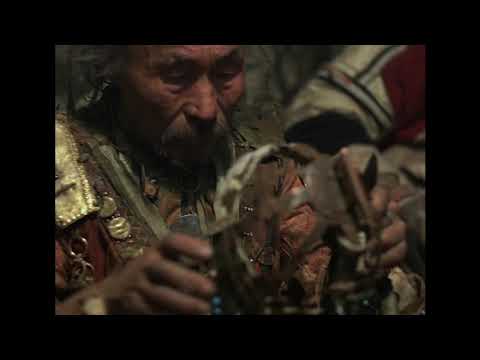
The Shaman, English version
Šamaan: the Nganasan shaman Demnime, filmed on the Taymyr Peninsula in 1977.
YouTube -

Urmas Ott and Lennart Meri, “Urmas Ott ja teised” (1994)
The president as a guest on Urmas Ott’s year-end television show.
YouTube -
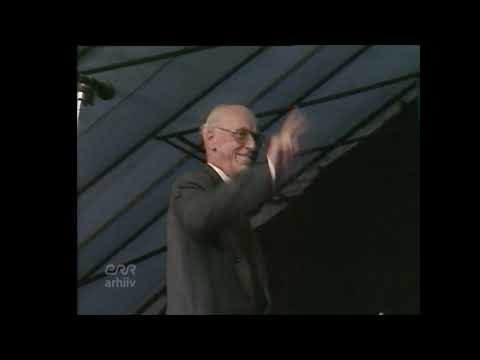
Lennart Meri’s presidential campaign, 1992
Campaign footage from the first presidential election of the restored republic.
YouTube -

-

-

Hõbevalge in Italian: curator Gianni Glinni presents the edition
On the Italian translation of Hõbevalge.
YouTube -

-

Lennart Meri – Ein Leben für Estland (1994)
A German television documentary on Meri and the young republic.
YouTube -

Dances for the Milky Way: Meri’s film journeys (2010)
Jaak Lõhmus’s documentary about the making of Meri’s Finno-Ugric film encyclopaedia.
YouTube -

-

The Story of the Lennart Meri Conference (2018)
How the conference grew from a memorial event into one of Europe’s security forums.
Lennart Meri Conference -
-
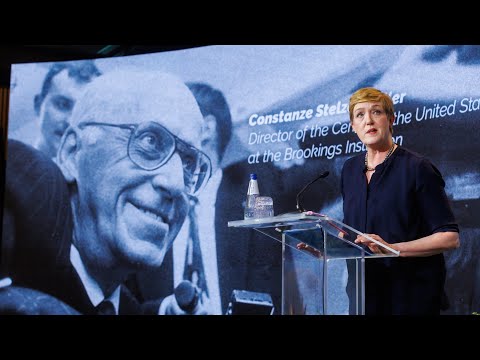
Lennart Meri Talk, Lennart Meri Conference 2025
The keynote conversation of the 2025 conference held in his name.
Lennart Meri Conference
Where to watch
- Film by Meri Veelinnurahvas (1970) on ERR Jupiter ERR Jupiter · 1970
The Waterfowl People in the broadcaster’s own player.
- Film by Meri Linnutee tuuled (1977) on ERR ERR / ETV2 · 1977
The Winds of the Milky Way in the broadcaster’s own player.
- Film by Meri Kaleva hääled (1986) ERR Jupiter · 1986
The Sounds of Kaleva: memory, the Kalevala and an ancient iron-smelting ritual.
- Film by Meri Toorumi pojad (1989) on ERR ERR arhiiv · 1989
The Sons of Torum in the ERR archive.
- Interview “Olukord on sitt, kuid see on meie tuleviku väetis” ERR arhiiv · 1997
His most quoted line, in his own voice.
- Interview President Lennart Meri’s last interview in office (2001) ERR arhiiv · 2001
His farewell interview as president, recorded on leaving office in October 2001, with Vahur Kersna.
- Interview Subjektiiv: Face to face with Lennart Meri ERR arhiiv
A long-form conversation from the ETV series Subjektiiv.
- Interview “Lennart Meri ütles”, the ERR radio series ERR arhiiv
Short archive pieces built around one Meri sentence each, in his own voice.
- Speech Speech on the 75th anniversary of the Republic (1993) ERR arhiiv · 1993
His first Independence Day speech as president, 24 February 1993, in the ERR archive.
- Speech President Meri’s New Year greeting for 1998 ERR arhiiv · 1998
The televised New Year address, in the ERR video archive.
- Speech “Tule taevas appi!” ERR arhiiv · 2001
Heaven help us: the exasperated aside from his last Independence Day speech as president.
- News The press conference in the Tallinn Airport toilet ERR Jupiter
The famous stunt: the president summons the press to the airport toilets to shame the state of the terminal into repair.
- About Meri Mina, Lennart Meri (ERR documentary) ERR Jupiter
A portrait film about Meri on ERR’s Jupiter.
- About Meri Mina olengi protokoll. Lennart Meri (ERR) ERR Jupiter
“I am the protocol”: a documentary on the president’s way with rules.
- About Meri Trikoloor, episode 3: Lennart Meri ERR arhiiv
The episode of the ETV series Trikoloor devoted to Meri.
09LegacyPärand
09 · Metsakalmistu, Tallinn · 59°28′N 24°50′E
An airport, a conference, and a way of thinking about a small country.
What was named after him, the honours he received, and where the road ends.
Named after him
-
Lennart Meri Tallinn Airport 2009
On 29 March 2009, his 80th birthday, Tallinn Airport was named after him. The idea came from journalist Argo Ideon and was announced by Prime Minister Andrus Ansip at the opening of the new terminal in 2008.
-
Lennart Meri Conference 2007
An annual foreign-policy and security conference held in Tallinn each spring by the International Centre for Defence and Security, first convened in 2007 as a commemorative event and now one of the leading gatherings of its kind in Northern Europe.
-
Lennart Meri Fund
A fund at the Fenno-Ugria Foundation supporting work among the Finno-Ugric peoples, in the spirit of his film expeditions.
-
Meremärk, the Lennart Meri monument in Helsinki
A memorial to Meri in the courtyard of the Estonian Embassy in Helsinki, marking his lifelong bond with Finland; the sentence engraved on it is his line about meat, fish, blood and water.
-
Lennart Meri Research Award 2007
Set up by the University of Tartu and its foundation in his memory, the award goes each year to research work at the university.
-
President Lennart Meri Prize 2014
Viimsi municipality and the Meri family award the prize to humanities students every year on his birthday, 29 March, at a memorial gathering.
-
Bust at the Ministry of Foreign Affairs
A bust by the sculptor Tauno Kangro stands in the ministry Meri led in 1990–1992.
Honours
- 1986 Honorary doctorate of the University of Helsinki University of Helsinki
- 1996 Coudenhove-Kalergi European Prize European Society Coudenhove-Kalergi
- 1996 Order of the Three Stars, Commander Grand Cross with Chain Republic of Latvia
- 1998 European of the Year La Vie (France)
- 2001 Member of the Estonian Academy of Sciences Estonian Academy of Sciences
- 2002 Member of the Club of Madrid Club de Madrid
- 2006 Honorary citizen of Viimsi Viimsi Municipality
The farewell
Mina ei kavatse surra, ma jään Eestisse teie hulka.
I do not intend to die; I am staying in Estonia, among you.
The road ends
Lennart Meri died of cancer in the early hours of 14 March 2006 at East Tallinn Central Hospital. The state funeral was held on 26 March 2006 at Kaarli Church in Tallinn, where he had been baptised in 1929. After a procession past Kadriorg Palace he was buried at Metsakalmistu, the forest cemetery on the edge of the city, among the graves of Lydia Koidula, Paul Keres and other Estonians whose work outlived them. Estonia had joined NATO on his 75th birthday, two years earlier, and the European Union five weeks after that.
Lennart Meri Conference
Since 2007 the International Centre for Defence and Security has held the Lennart Meri Conference in Tallinn every spring. It gathers heads of state, ministers, diplomats and analysts to argue about the security of Europe’s north-east in the plain-spoken style he practised.
10ArchivesArhiivid
10 · Tallinn · 59°25′N 24°44′E
Where the rest of him is kept.
Photographs, broadcasts, films and papers live in public archives. These are the doors.
Photographs
-

The old passenger terminal of Lennart Meri Tallinn Airport · 2012 Diego Delso · CC BY-SA 3.0 Source -

Kaali meteorite crater, Saaremaa, August · 2007 Mannobult · CC BY-SA 3.0 Source -

President Lennart Meri, 15 January · 1998 Helene C. Stikkel · Public domain Source -

Lennart Meri, the year after leaving office · 2002 Jaan Künnap · CC BY-SA 4.0 Source -

Lennart Meri, 3 July · 2004 Alex Nordstrom · CC BY-SA 4.0 Source -

Lennart Meri in Edgar Tedresaar’s mural “Symbols of My Era” (Stencibility festival, 2015) under Sõpruse bridge in Tartu, photographed during the bridge repairs · 2025 Tauno Erik · CC BY 4.0 (the photograph only) Source -

Lennart Meri’s grave at Metsakalmistu, Tallinn · 2011 Ave Maria Mõistlik · CC BY 3.0 Source -

Lennart Meri on Town Hall Square in Tallinn · 1999 Jaan Künnap · CC BY-SA 4.0 Source


- Photographs Wikimedia Commons Freely licensed photographs of Meri, from the presidency and after; each file’s page states its licence and what reuse requires. Open
- Radio and television ERR arhiiv Estonian Public Broadcasting’s archive: his films, speeches, interviews and the “Lennart Meri ütles” series. Open
- Films Eesti filmi andmebaas The Estonian film database, with production details and crew for every documentary. Open
- Life and legacy Rahvusraamatukogu · Üks Meri kõik The National Library’s exhibition for his 95th birthday: life, books, presidency. Open
- Conference Lennart Meri Conference The annual Tallinn conference held in his name since 2007, with recordings of past sessions. Open
- Encyclopaedia, in Estonian Vikipeedia The Estonian encyclopaedia article, with a full bibliography and references. Open
- Encyclopaedia, in English Wikipedia The English article: presidency, films, books and further reading. Open
Sources & credits
Everything on this page is drawn from public sources: the archive of President Meri’s speeches, Estonian Public Broadcasting (ERR), the Estonian and English Wikipedias, the Estonian film database, and the press. Each quote, date and film links back to where it was found, so you can read the whole thing in context.
The speech texts are those of the Office of the President’s speech archive for 1992–2001. That archive is no longer online, so each speech links to the Internet Archive’s copy of its own page (the Hamburg speech to ERR’s republication); the passages were first located through a corpus that Toomas Eilat collected from the archive and published on GitHub without a licence (toomase/presidendi_koned). Photographs are credited in place: each caption names the photographer and the licence, and a Creative Commons licence is linked to its text. On the page their colours are slightly muted and the Kaali panorama is cropped to its frame; the enlarged view shows each picture whole. Where a film or book description says it is adapted from a Wikipedia article, it stays under that article’s licence, CC BY-SA 4.0. The land outline in the globe is Natural Earth data (public domain).
Unless marked otherwise, the text written for this page is licensed under CC BY-SA 4.0; quotations and their translations, the speech texts, passages adapted from Wikipedia and the photographs keep their own authors and terms, given where they appear.
If you spot an error or hold rights to something shown here, open an issue on the project repository and it will be fixed.
Domains cited
- youtube.com 20
- web.archive.org 16
- arhiiv.err.ee 12
- et.wikipedia.org 12
- tsitaadid.ee 10
- commons.wikimedia.org 9
- err.ee 7
- et.wikiquote.org 7
- vanaraamat.ee 7
- ewod.ut.ee 6
- jupiter.err.ee 6
- raamatud.postimees.ee 5
- tsitaat.com 4
- en.wikipedia.org 4
- efis.ee 4
- et.m.wikiquote.org 3
- estonianworld.com 3
- news.err.ee 3
- president.ee 2
- lennartmeri95.rara.ee 2
- lmc.icds.ee 2
- postimees.ee 2
- leo.ee 2
- etv2.err.ee 2
- helsinki.mfa.ee 1
- vikerraadio.err.ee 1
- icds.ee 1
- goodreads.com 1
- arvamus.postimees.ee 1
- fi.wikiquote.org 1
- vm.ee 1
- sfchronicle.com 1
- nato.mfa.ee 1
- eu.mfa.ee 1
- clubmadrid.org 1
- valimised.ee 1
- nato.int 1
- rara.ee 1
- teadus.postimees.ee 1
- jamestown.org 1
- kriso.ee 1
- rahvaraamat.ee 1
What this page does not know
Some of these lines are written, and each names a check that stops the build if the hole it describes has been filled. The rest are counted from this page’s own files, so when the data moves the card moves with it.
- The Office of the President’s speech archive for 1992–2001 is no longer online. The full texts of the speeches open from here, all but one, as the Internet Archive’s copies, captured at different times; the page cannot promise that those copies will stay, nor check them against anything more recent. web.archive.org
- Some quotations come from quote-collection sites rather than from the speech or book itself. Those sites usually do not say where a line came from, so the exactness of the wording cannot be checked from this page. tsitaadid.ee
- Of the deportation years 1941–1946 this page knows two dates — the taking and the return — and nothing between them. The timeline’s thread is drawn as torn across those years, because there is nothing for it to rest on. et.wikipedia.org
- The expedition map’s stops are placed by hand-set drawing coordinates, not by real latitude and longitude: the map shows where he went, but it is not an instrument of measurement. et.wikipedia.org
- Three videos that used to open here through YouTube — “Kaleva hääled”, the last interview as president, and the airport-toilet press conference — have been taken down there. The page now points at the ERR archive, where they can be watched from Estonia; some of them may be unavailable outside it. arhiiv.err.ee
- 22 of the timeline’s 47 entries are dated only to a year: the day and the month are not known for them. → timeline
- 15 of the 41 quotations rest on a quote-collection site rather than on a primary text. → words
- 15 of the 35 videos open on an archive’s own site rather than here: the page cannot play them or promise they will load. → videos
If one of these lines is wrong, it is the page that is wrong — the errata link below says where to say so.